
Best Garage Ceiling Racks for Organized Homes
Closets Beyond6 min read
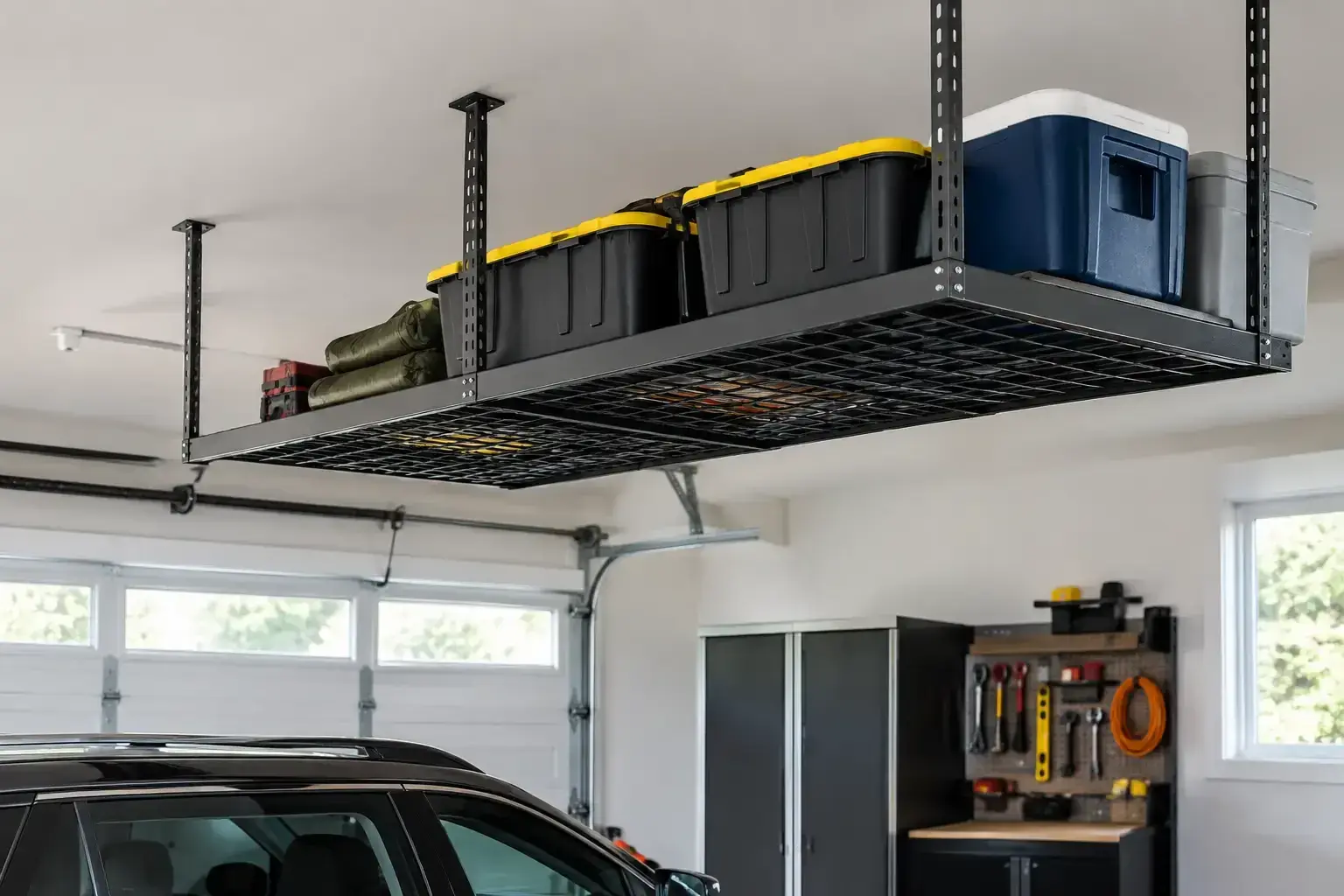
A garage floor disappears quickly when bicycles, holiday bins, sports gear, coolers, and contractor supplies all need a place to land. The best garage ceiling racks can reclaim that overlooked space above your car, creating room to park, walk, and work without turning everyday items into visual clutter.
But overhead storage is not a universal answer. A ceiling rack works best for belongings you need occasionally, not the items you reach for every weekend. The right choice depends on ceiling height, framing, access, load requirements, and the rest of your garage layout. A thoughtfully organized garage balances overhead capacity with cabinetry, wall storage, and clear floor space.
What Makes the Best Garage Ceiling Racks Worth Considering?
A quality ceiling rack does more than hold plastic bins. It should create dependable, accessible storage while respecting the structure and function of the garage below. For most homeowners, the best systems are mounted directly into ceiling joists and designed with a clear understanding of what will be stored on them.
Strength is the first consideration, but stated weight capacity is only part of the equation. The rack, fasteners, joists, and installation method must all support the intended load. A rack rated for several hundred pounds is only as reliable as the framing it is secured to. This is why professional measurement and installation can be especially valuable in garages with finished ceilings, unusual framing, or mechanical systems overhead.
Adjustability also matters. Many ceiling racks use vertical drop rods that allow the platform to sit lower than the ceiling. That can make bins easier to reach, but it also reduces clearance for vehicles, garage doors, and taller equipment. A rack positioned too low can turn valuable storage into a daily obstacle.
Finally, consider construction. Powder-coated steel is a common, practical choice because it resists rust and holds up well in the heat and humidity common in South Florida garages. Open-grid platforms allow visibility and airflow, while solid shelving may better support smaller or irregularly shaped items. Neither style is automatically better - the contents determine the smarter fit.
Choose Ceiling Storage Around Access, Not Just Capacity
The most common overhead-storage mistake is treating every empty inch of ceiling as usable space. A garage can have ample square footage overhead and still be a poor candidate for a large rack if the door tracks, opener, lighting, sprinkler lines, or attic access occupy the same zone.
Start by identifying what truly belongs overhead. Seasonal decor, labeled totes of keepsakes, camping equipment, and backup household supplies are strong candidates because they are durable, contained, and infrequently needed. Heavy tools, loose items, everyday sports equipment, and anything you would hesitate to lift above shoulder height belong somewhere more accessible.
The best placement is often above the garage door, above the hood or trunk area of a parked vehicle, or along a side zone that does not interfere with movement. Exact placement should be based on open and closed garage-door clearance, vehicle height, and the route you will use to retrieve items.
Measure the full vertical path
Do not measure only from the ceiling to the floor. Measure from the rack's lowest point to the tallest vehicle that will park beneath it, including roof racks, antennas, or a future vehicle with greater height. Also account for the garage door when it is fully open. Door panels and tracks can occupy more overhead room than expected.
A ladder must also fit safely below the rack. If retrieving a tote requires awkward climbing between a vehicle and a workbench, the storage may be technically available but functionally frustrating.
Store by weight and frequency
Place the lightest, least-used items toward the center or back of a rack, where reaching them is less convenient. Keep heavier bins within a manageable lifting range and avoid stacking containers so high that they can shift when one is removed.
Clear, matching bins with large labels make overhead storage more useful. You should be able to identify the contents without pulling down several containers to find one extension cord or a strand of lights. Visual order matters in a garage just as much as it does in a pantry or closet.
Fixed Racks, Lift Systems, and Custom Overhead Storage
Ceiling storage generally falls into three categories: fixed platform racks, pulley or motorized lift systems, and custom-built solutions integrated into a larger garage design. Each has a place, and each comes with trade-offs.
Fixed platform racks are often the most straightforward option. They are durable, relatively simple, and well suited to bins and bulky seasonal items. Their limitation is access: everything must be lifted manually, typically with a ladder. For stable, long-term storage, that may be perfectly appropriate.
Lift systems bring stored items down to a more accessible height through a pulley or motorized mechanism. They can be useful for bikes, cargo boxes, or equipment that is awkward to raise overhead. However, they require careful installation, enough open floor space below, and regular attention to cables, locking mechanisms, and weight limits. A lift is convenient only when the area beneath it can remain clear.
Custom overhead storage can be designed around the realities of the garage rather than the dimensions of a standard kit. This is particularly helpful when a homeowner wants garage cabinetry, a work zone, wall-mounted equipment storage, and overhead capacity to work together. The goal is not to cover the ceiling with racks. It is to assign every category of belongings to the most sensible location.
Safety Details That Should Never Be an Afterthought
Overhead storage carries more responsibility than a shelf mounted at eye level. Items are elevated, often heavy, and often retrieved only a few times a year. A few careful decisions protect both your belongings and the people using the garage.
Never attach a ceiling rack to drywall alone or assume studs are positioned where a product's mounting holes happen to fall. The rack must connect properly to structural framing with hardware appropriate for the load and ceiling construction. If there is any uncertainty about joist direction, spacing, wiring, plumbing, or attic conditions, bring in an experienced installer.
Keep storage away from heat-producing equipment, electrical panels, garage-door hardware, and any required access points. Do not overload a platform simply because there is empty space on it. Weight should be distributed evenly, with bins secured and nothing hanging over the edge.
It is also wise to review the rack periodically. Check for loose fasteners, corrosion, bent components, or changes in the ceiling around mounting points. This is especially relevant in humid climates, where garages may be exposed to moisture and sharp temperature changes.
When Ceiling Racks Are Not the Best Answer
A ceiling rack may not be the right investment when the garage has low ceilings, a tall SUV, frequent access needs, or a collection of heavy equipment. In those cases, overhead storage can make the room feel more crowded rather than more organized.
Wall-mounted systems are usually better for bicycles, rakes, gardening tools, folding chairs, and frequently used sports gear. Base cabinets and tall cabinets are ideal for chemicals, power tools, pet supplies, and items that need to stay protected from dust. A workbench with drawers can bring order to repair supplies that would otherwise migrate across the floor.
For households that use the garage as an entry, workshop, storage area, and parking space, a layered plan produces the best results. Daily-use items stay at arm's reach, occasional-use items move higher, and long-term storage is contained in the uppermost zones. The garage begins to feel less like a holding area and more like a purposeful extension of the home.
Build a Garage That Stays Organized
The best garage ceiling racks are the ones that support your routine without demanding extra effort every time you need something. Before choosing a rack, take inventory of what you own, how often you use it, and what deserves easier access. That assessment often reveals that a single overhead platform is helpful, while a fully coordinated storage plan is transformative.
At Closets Beyond, garage organization can be designed around your vehicles, hobbies, household storage, and preferred workflow, with professional installation that removes the guesswork from the finished space. When every item has a considered place, you gain more than overhead storage - you gain a garage that is ready for the way you actually live.
See your space in 3D before anything is built.
Every consultation includes a 3D design of your space. Your designer measures, plans it with you and gives you a quote that fits your budget.
- 5.0 from 24 Google reviews
- Lifetime guarantee on our imported materials
954-213-5836Open Mon–Sat 8–6