
How to Create Entryway Storage That Works Hard
Closets Beyond6 min read
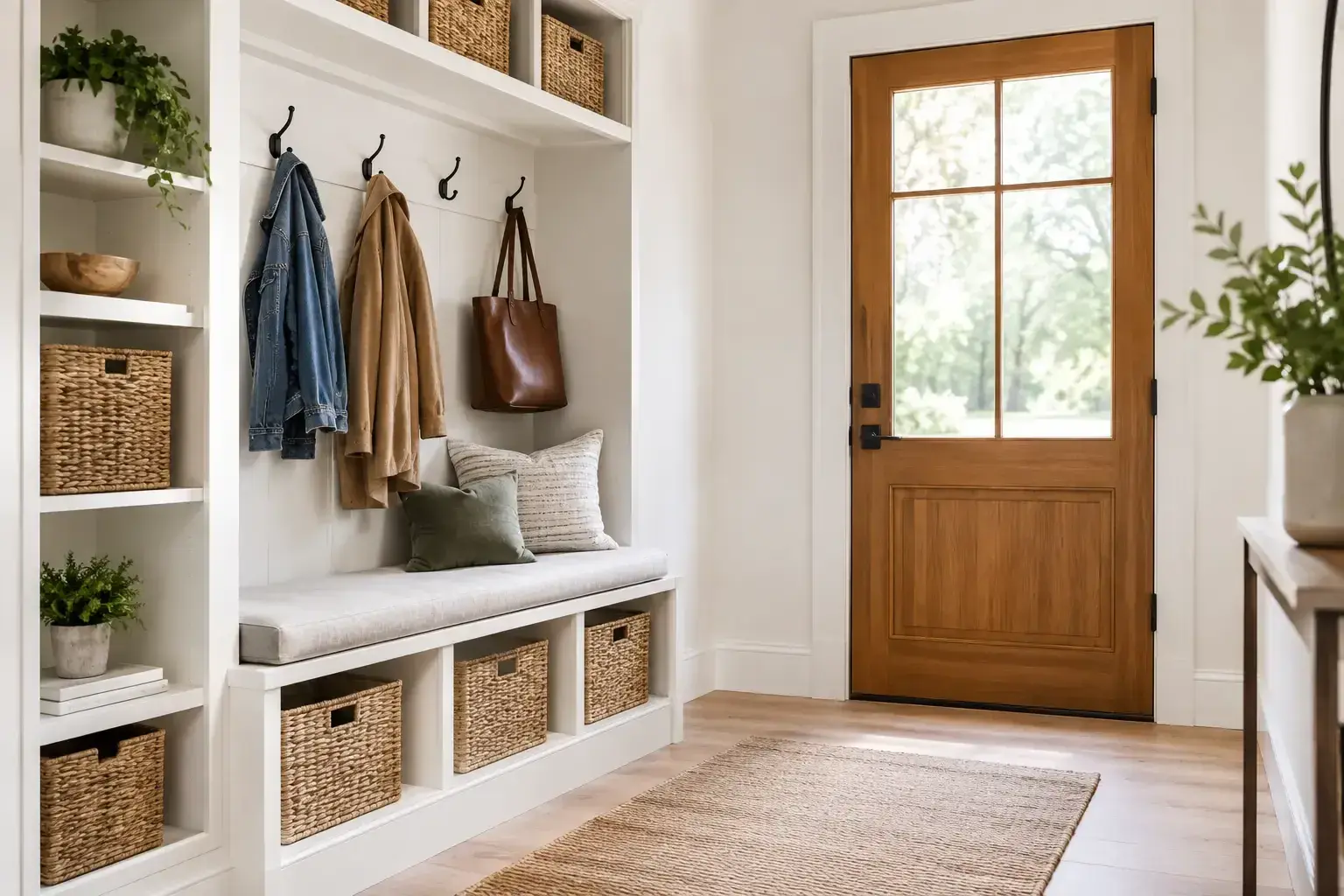
The front door is where the day tends to unravel first. Shoes collect under a console table, bags land on the nearest chair, and mail becomes a growing pile that no one wants to claim. Learning how to create entryway storage is less about adding another piece of furniture and more about giving every arriving and departing item a deliberate place.
A well-designed entryway should make leaving easier, returning calmer, and the first view of your home feel considered. Whether you have a spacious South Florida foyer, a narrow hall, or a door that opens directly into the living room, the right storage plan can turn a daily bottleneck into a polished transition space.
Start With the Way Your Household Actually Moves
Before choosing cabinets, hooks, or baskets, observe what happens at your entrance. Which door does the family use most often? Do children drop backpacks and sports gear there? Are wet umbrellas, pet leashes, work bags, or beach totes part of the daily routine? A formal front entry and an active family drop zone may be close together, but they need very different solutions.
The most effective entryway storage is organized around behavior, not a generic checklist. If shoes come off at the door, open shoe storage needs to be within a step or two of it. If keys disappear every morning, they need a dedicated landing spot at hand height, not a drawer across the room. When storage follows the natural sequence of arriving home, staying organized requires less effort.
Take inventory of the items that deserve a permanent home. Most entryways need a combination of shoes, outerwear, bags, keys, mail, charging cords, and seasonal items. The goal is not to display all of it. The goal is to keep daily essentials accessible while allowing visual clutter to disappear.
How to Create Entryway Storage Around Zones
Even a compact entry benefits from clear storage zones. Think of the space as a small, highly functional room rather than an empty stretch of wall.
Create a drop zone for small essentials
A shallow drawer, a concealed charging shelf, or a designated tray can contain the items that otherwise migrate across countertops. Keys, sunglasses, wallets, mail, and earbuds should have an obvious home near the door. If paper clutter is a recurring problem, include a slim file drawer or vertical mail sorter behind a cabinet door rather than relying on an open bowl that quickly overflows.
For busy households, a charging station can be especially useful. Built-in outlets inside a drawer or cabinet keep phones and tablets powered without creating a tangle of visible cords. It is a small detail that makes an entryway feel more intentional and less like a temporary holding area.
Give shoes a place that matches your habits
Shoe storage is often the feature that determines whether an entry remains tidy. Open cubbies are convenient for frequently worn pairs, especially for children, but they can look busy if the area is visible from the main living space. Closed cabinets provide a cleaner appearance and work well in formal entries, though they require enough depth and ventilation for the shoes your household wears most.
A combination often works best: easy-access cubbies or a low bench for everyday footwear, plus closed storage for extra pairs. In a narrow hall, angled shoe shelves or a shallow custom cabinet can provide meaningful capacity without making the walkway feel crowded.
Plan for bags, coats, and the unexpected
Hooks are practical, but an entire wall of exposed jackets can make even a beautiful home look unfinished. Consider limiting open hooks to a few daily-use items and placing the rest behind cabinet doors. A tall locker-style section can hold handbags, backpacks, umbrellas, and light outerwear while keeping the entry visually calm.
If your home has a true mudroom or a garage entry, individual storage bays give each family member a defined place to reset. A bench below and adjustable shelving above create a useful personal station without consuming more floor space than necessary. For homes without a separate mudroom, a single integrated wall unit can deliver the same function with a more refined furniture-like appearance.
Make the Most of the Space You Have
The best layout depends on the architecture. A large foyer can accommodate a statement storage wall, a built-in bench, or a tailored console with concealed cabinets. A compact entry needs restraint. One well-proportioned system will usually serve the room better than several small, mismatched pieces.
In a narrow entry, look up. Vertical cabinetry makes use of wall height for seasonal items, extra bags, and supplies that do not need daily access. Keeping the lower portion of the unit lighter - with a bench, open cubby, or toe-kick lighting - can prevent a tall system from feeling heavy.
Corners and under-stair areas also deserve a closer look. These are often overlooked zones where custom cabinetry can capture valuable storage without interrupting traffic flow. A tailored solution can accommodate uneven walls, electrical outlets, baseboards, and door swings in a way freestanding furniture rarely can.
Clearance matters as much as storage capacity. Doors and drawers should open without blocking an exterior door, staircase, or primary path through the home. If space is tight, sliding doors, pull-out drawers, and shallow-depth cabinetry may be better choices than swinging cabinet fronts.
Balance Open Convenience With a Finished Look
Entryway storage has to work hard, but it also sets the tone for the home beyond it. Open shelves, hooks, and baskets create an easy, casual feel. They are ideal when access matters more than perfect visual order. Closed cabinetry creates a quieter, more elevated look and is often the right choice for entries visible from a living room or dining area.
The trade-off is simple: open storage asks for daily discipline, while closed storage may add an extra step. A blended design avoids the extremes. Leave one or two open areas for immediate-use items, then use drawers and doors for the rest.
Materials and finishes play a major role in making the system feel integrated. Matching or complementing nearby cabinetry, flooring, and trim gives the entryway a purposeful look. Durable finishes are particularly valuable in high-traffic homes, where sand, wet shoes, pet gear, and frequent use can quickly wear down lower-grade materials.
Design for Every Season, Not Just a Perfect Day
An entryway can look organized in mild weather and still fail during the busiest parts of the year. Plan for the bulkier items that appear when routines change: holiday packages, rain gear, visiting guests' shoes, sports equipment, or seasonal decorations waiting to be put away.
Adjustable shelving gives you flexibility as children grow or household needs shift. Deep upper cabinets can hold occasional-use items, while lower drawers make it easier to access necessities without bending into a dark, crowded cabinet. Consider a dedicated spot for pet supplies as well. A small drawer for leashes, waste bags, and towels can prevent those practical items from taking over the kitchen.
Lighting is another finishing detail that earns its place. Interior cabinet lighting makes deeper storage more usable, while soft under-bench lighting improves visibility during early departures and late arrivals. It also adds warmth to an area that is often the first and last space your family sees each day.
When Custom Entryway Storage Is Worth It
Freestanding furniture can work for a simple, low-demand entry. A console, bench, and a few hooks may be enough for a single resident or a rarely used front door. But when the entry serves as the household's main command center, custom storage offers advantages that are difficult to replicate with standard pieces.
A personalized design can be built to the exact dimensions of the wall, account for awkward corners, and include the features your family will actually use. It can also coordinate with adjacent rooms, creating a cohesive transition rather than a collection of individual storage purchases. With in-home design planning and professional installation, homeowners can see how proportions, finishes, and interior configurations will work before production begins.
Closets Beyond approaches entryway storage as part of the larger home, pairing tailored organization with premium materials, thoughtful design, and expert installation. That matters when you want the room to feel as finished as it is functional.
Your entryway does not need to be large to make a meaningful difference. It simply needs to support the rhythms of your household, contain the things that create daily clutter, and offer a welcome home that feels calm from the moment the door opens.
See your space in 3D before anything is built.
Every consultation includes a 3D design of your space. Your designer measures, plans it with you and gives you a quote that fits your budget.
- 5.0 from 24 Google reviews
- Lifetime guarantee on our imported materials
954-213-5836Open Mon–Sat 8–6