Best Pullout Pantry Storage for Everyday Ease
Closets Beyond6 min read
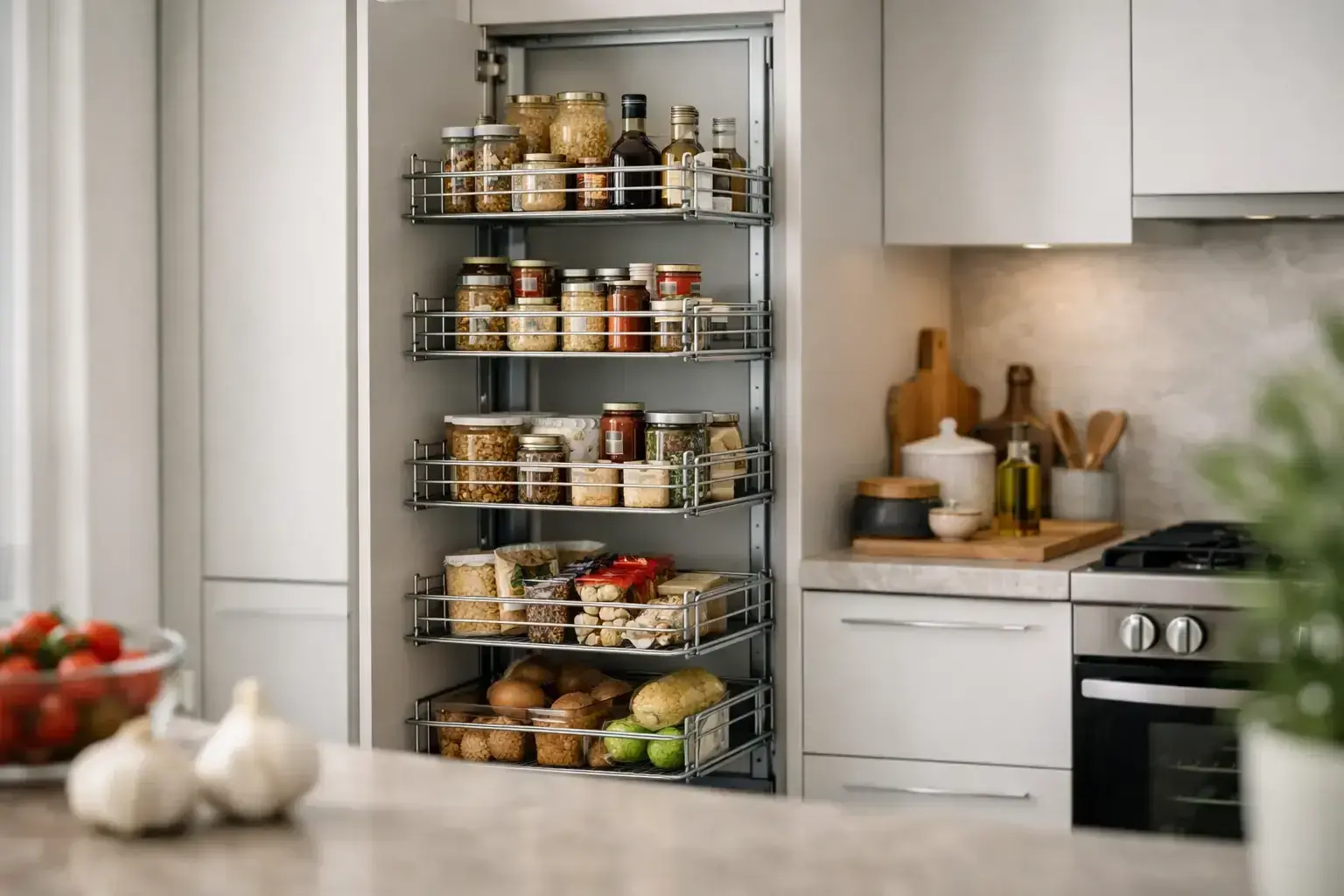
A pantry can look polished at first glance and still create daily frustration. The real test comes when you are reaching past half-used boxes, crouching to find a can at the back, or buying another item because the first one disappeared into a deep cabinet. The best pullout pantry storage solves those small, repeated problems by bringing the entire pantry forward, into view, and within easy reach.
For homeowners who value a well-run kitchen, pullout storage is not simply an upgrade in convenience. It is a way to make every cabinet work with your household's routines, grocery habits, and available square footage. The right design creates a pantry that feels calm, intentional, and remarkably easy to maintain.
Why Pullout Storage Changes How a Pantry Works
Traditional fixed shelves ask you to work around the cabinet. Deep shelves create dark, hard-to-reach zones where ingredients get forgotten, while stacked items hide what is behind them. Pullout shelves reverse that relationship. They extend outward on durable hardware, allowing you to see the contents from the front to the back without unloading half the cabinet first.
That visibility can make a meaningful difference for busy households. You can spot low supplies before heading to the store, rotate food more easily, and give every category a defined place. Children can reach approved snacks without climbing or pulling down unstable containers. Adults can access heavier items with less bending and lifting.
A pullout pantry also brings a more refined visual order to the kitchen. When items are arranged in purposeful zones rather than crammed into a single cavity, the room functions more like a thoughtfully designed space and less like a constant catchall.
The Best Pullout Pantry Storage Starts With Your Layout
There is no single pullout system that is right for every home. A narrow pantry cabinet, a walk-in pantry, and a pantry wall built into kitchen cabinetry each call for different dimensions and features. The most effective design begins with the cabinet depth, door clearance, traffic flow, and the types of items your household actually stores.
Full-Extension Pullout Shelves for Deep Cabinets
Full-extension shelves are often the foundation of a high-functioning pantry. Because the shelf comes fully forward, you can access jars, baking supplies, canned goods, and small appliances stored at the very back. This is especially valuable in lower cabinets, where visibility and reach are naturally limited.
For a custom pantry, shelf heights can be designed around the products you buy most often. Taller openings might hold cereal boxes, oils, or countertop appliances, while lower, shallower shelves can keep snacks, spices, and packets neatly contained. The goal is not to create identical rows. It is to give each category the amount of space it needs.
Tall Pullout Units for Narrow Spaces
A slim vertical pullout can turn an overlooked gap between cabinets into highly usable pantry storage. These units are well suited to bottles, spices, foil, wraps, or dry goods that would otherwise get lost on a broad shelf. When the entire frame glides outward, items on both sides stay visible and easy to sort.
Narrow pullouts are particularly useful when a kitchen does not have room for a separate walk-in pantry. They use vertical space efficiently without requiring a large footprint. However, they must be sized and supported correctly. Overloading a tall, narrow pullout can make it feel less stable, which is why quality hardware and professional installation matter.
Pullout Baskets and Bins for Flexible Categories
Wire or solid-sided pullout baskets work well for produce, packaged snacks, lunchbox items, and other categories that change frequently. Their open format makes it easy to see what is inside, and they can provide a more forgiving storage option than a precisely divided shelf.
The trade-off is visual consistency. Open baskets can appear busier than enclosed drawers or clean-lined pullout shelves, especially if packaging varies. For many families, the best approach is a combination: structured shelves for staples and a few flexible pullout bins for the items that rotate through the pantry each week.
Storage Features Worth Specifying
A polished pantry is built around more than movable shelves. The details determine whether a pullout feels smooth and dependable years after installation or becomes another source of frustration.
Look for full-extension, soft-close glides that allow shelves to travel smoothly and return quietly. Heavy-duty hardware is essential for canned goods, bulk purchases, countertop appliances, and glass containers. Adjustable shelf positions are equally valuable because grocery habits change over time. A pantry designed only for today's products can become limiting as a family grows or routines shift.
Shelf edges and containment also deserve attention. A low rail, raised side, or integrated bin can keep bottles and jars secure as the shelf moves. For items such as oils or baking ingredients, this small feature prevents unnecessary spills and keeps the cabinet interior looking well cared for.
Material choice affects both appearance and durability. Premium panels and finished surfaces create a more tailored look while standing up to everyday use. In a humid South Florida home, materials and construction details should also be chosen with the local environment in mind, particularly in kitchens that see frequent use and changing indoor-outdoor activity.
Design by Category, Not by Container
One common pantry mistake is choosing storage based on whatever containers happen to be on hand. A better approach is to begin with categories and household behavior. Consider what comes into the pantry each week, what gets used daily, and what tends to accumulate.
Breakfast items may need an eye-level pullout near the coffee station. Baking supplies may belong together on a sturdy lower shelf where mixers and flour can be reached comfortably. Weeknight staples should sit in the most accessible zone, while entertaining platters, seasonal items, and backup supplies can take the higher or lower areas.
This approach also makes maintaining order easier. When every category has a natural home, putting groceries away becomes quick rather than another project. You do not need a pantry that looks staged. You need one that helps your household reset the space without effort.
When Custom Pullout Pantry Storage Is the Better Choice
Off-the-shelf organizers can improve a single shelf, but they rarely address the underlying layout. They may not fit the cabinet depth precisely, coordinate with existing finishes, or support the weight of a fully stocked pantry. They can also leave gaps that waste valuable inches.
Custom pullout pantry storage is designed around the room itself. It can account for an unusual cabinet width, a shallow wall, a pantry door swing, or a kitchen remodel that needs to blend storage with cabinetry. It also lets you decide where to invest: perhaps heavy-duty pullouts are most important in the lower pantry, while adjustable fixed shelving is sufficient for seldom-used serving pieces.
At Closets Beyond, the process begins with how you live, not with a predetermined shelf package. In-home design planning and 3D visualization help homeowners see how dimensions, finishes, and pullout features will work together before installation begins. That clarity is valuable when a pantry needs to feel as elevated as the rest of the home while doing serious daily work.
A Few Practical Decisions Before You Design
Before finalizing a pantry plan, take stock of what you store. Measure bulky appliances, note the height of frequently purchased products, and consider whether you buy in bulk. A household that keeps large beverage packs and warehouse-size groceries will need deeper, stronger pullouts than a household that shops more often and stores smaller quantities.
Also think about access. If more than one person cooks, a pantry with multiple pullout zones can reduce congestion. If young children use the space, reserve lower pullouts for snacks and easy-to-handle items, and keep glass containers or specialty ingredients higher up. If aging in place is a priority, full-extension storage can reduce bending, reaching, and the need to move items out of the way.
Finally, leave some room to breathe. Filling every inch may sound efficient, but a pantry works best when it has space for an unexpected grocery run, a new favorite product, or the natural changes that come with family life.
The most satisfying pantry is not the one with the most accessories. It is the one where a busy morning, a quick dinner, or a weekend gathering feels easier because every item is visible, accessible, and exactly where it belongs.
See your space in 3D before anything is built.
Every consultation includes a 3D design of your space. Your designer measures, plans it with you and gives you a quote that fits your budget.
- 5.0 from 24 Google reviews
- Lifetime guarantee on our imported materials
954-213-5836Open Mon–Sat 8–6