
12 Best Walk In Closet Features for Daily Ease
Closets Beyond5 min read
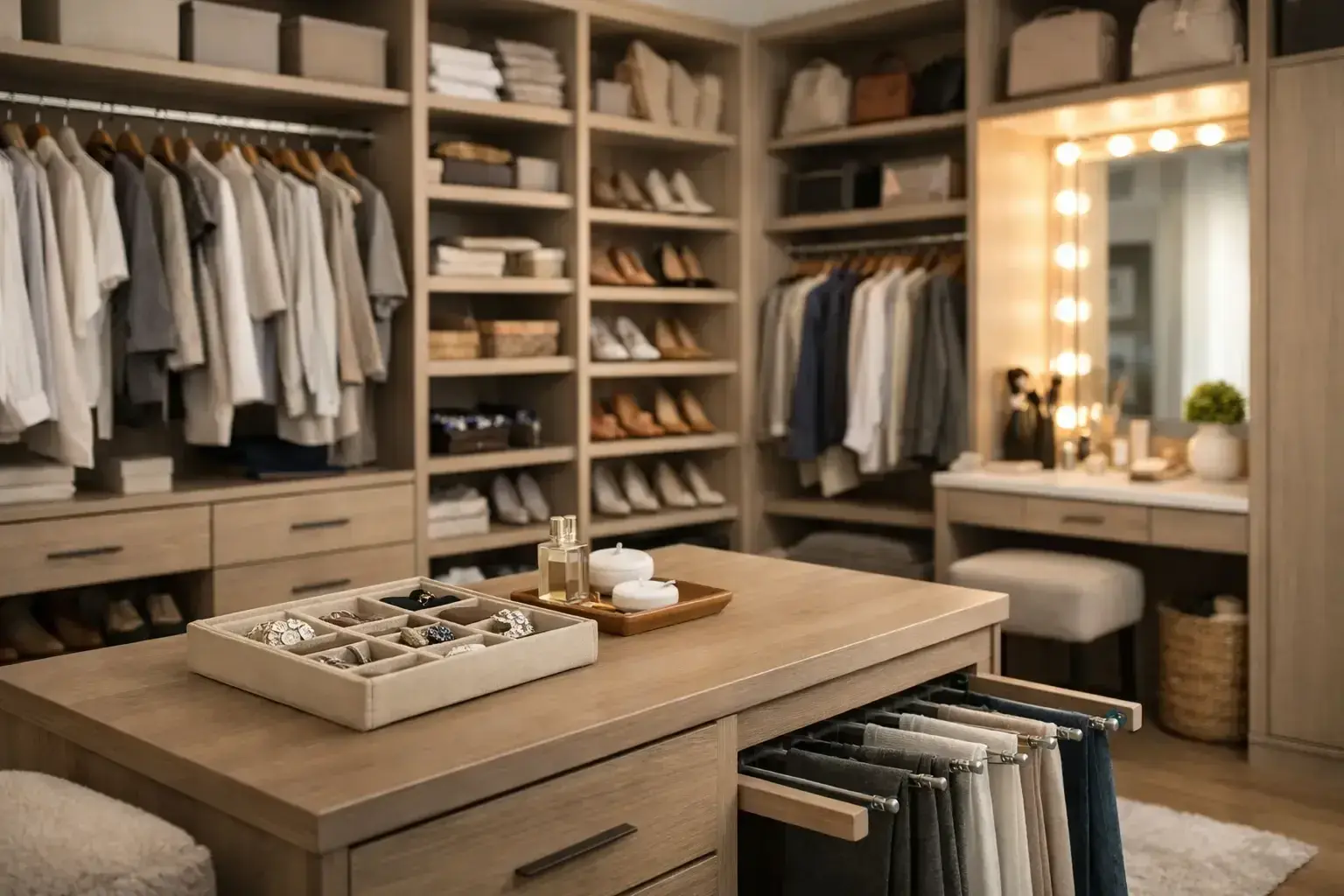
The morning rush has a way of exposing every weak point in a closet. Shoes disappear behind hanging clothes, folded items topple from crowded shelves, and a room meant to make getting ready easier becomes one more source of friction. The best walk in closet features solve those everyday problems with a layout that reflects how you dress, shop, store, and live.
A beautiful closet is part of the appeal, but function comes first. The right custom design gives every category a home, keeps frequently used pieces within reach, and makes the room feel intentional rather than overfilled. For homeowners who value a more polished routine, that shift can be felt every single day.
Best Walk In Closet Features Start With Smart Zones
A walk-in closet should not be designed as one large storage wall. It works best when it is divided into practical zones: one for daily clothing, one for longer garments, one for folded items, one for shoes, and one for accessories. This simple planning step prevents prime space from being wasted on items you rarely touch.
Start by considering the actual contents of the closet, not an idealized version of them. A professional wardrobe with dresses, blazers, and trousers needs generous hanging capacity. A casual wardrobe may need more drawers, shelving, and shoe storage. Couples also benefit from clearly defined sides or sections, especially when their storage needs are very different.
The most useful designs place high-use items between waist and eye level. Seasonal clothing, luggage, keepsakes, and spare bedding can move to upper shelves, where they remain accessible without taking over the most convenient storage areas.
Double Hanging and Long-Hang Sections
Double hanging is one of the hardest-working features in a walk-in closet. It uses vertical space efficiently by creating two levels of hanging rods for shirts, blouses, skirts, folded pants, and jackets. In many closets, this adds far more usable capacity than another shelf would.
That said, double hanging should not replace every long-hang area. Dresses, coats, jumpsuits, and longer garments need dedicated clearance to avoid wrinkling or dragging. A well-designed closet balances both, with proportions based on the homeowner's wardrobe rather than a preset formula.
Drawers That Put Small Items in Order
Open shelving is useful, but it is not the answer for everything. Drawers bring visual calm to pieces that can quickly make a closet look cluttered, including undergarments, workout clothing, swimwear, T-shirts, socks, and accessories.
Shallow drawers with dividers are especially valuable for jewelry, watches, sunglasses, belts, and ties. Deeper drawers can hold bulky knits or handbags that would otherwise be stacked unevenly. Soft-close drawer hardware adds a quiet, refined detail while helping the space stand up to constant use.
Storage Features That Make Getting Ready Faster
A custom walk-in closet should reduce the number of decisions and searches built into a daily routine. These features are worth considering because they support order without making the room feel overly complicated:
- Adjustable shelves make it easier to accommodate changing shoe collections, handbag sizes, and seasonal storage needs.
- Angled or tiered shoe shelves keep pairs visible and protected, so footwear does not end up in a pile at the bottom of the closet.
- Pull-out hampers create a discreet place for laundry and eliminate the temptation to leave clothing on a chair or floor.
- Valet rods provide a temporary spot to stage tomorrow's outfit, hang dry-cleaning, or hold garments while packing.
- Dedicated accessory pullouts organize belts, ties, scarves, and jewelry in a way that makes each piece easy to see.
Not every closet needs every accessory. In a smaller walk-in, a few well-chosen solutions are usually more valuable than filling every available opening with hardware. The goal is a closet that feels easy to use, not one that asks you to remember a complicated system.
A Closet Island, When the Room Allows It
A center island can transform a larger walk-in closet into a true dressing space. It adds drawer storage, creates a convenient surface for folding and packing, and gives the room a furniture-like focal point. An island can also include specialty storage for jewelry, sunglasses, watches, or small accessories.
Clearance matters more than the island itself. There should be enough room to open drawers, access hanging sections, and move comfortably around the unit. If an island makes a closet feel tight, a slim peninsula, drawer tower, or additional wall storage may deliver a better result. Luxury should never come at the expense of function.
Lighting and Mirrors That Support the Space
Even an expertly organized closet feels less useful in poor lighting. Layered lighting helps homeowners see colors accurately, locate items quickly, and enjoy the room at any time of day. Recessed ceiling lighting provides broad illumination, while integrated LED lighting inside cabinets, along shelving, or beneath hanging sections adds visibility where it matters most.
Lighting should be thoughtfully placed to reduce shadows, particularly near drawers, shoe shelves, and mirrors. For South Florida homes, where bright natural light can be abundant but inconsistent in interior closets, well-planned artificial lighting keeps the space equally functional from morning through evening.
A full-length mirror is another feature that earns its place. Depending on the layout, it can be wall-mounted, integrated into a cabinet door, or positioned near a dressing area. The best location allows you to step back and see an outfit without blocking access to storage.
Premium Materials Make a Daily Difference
A closet is opened, closed, and relied on every day. Materials and construction should be selected for more than appearance. Durable cabinetry, quality edge banding, dependable hardware, and precisely fitted components help the system maintain its clean look over time.
Finish selection also shapes the room's character. Warm wood tones can create a tailored, furniture-inspired feel, while lighter finishes can make a compact closet appear more open and airy. Textured surfaces, glass-front drawers, decorative hardware, and integrated lighting can elevate the design further, but they should complement the home's overall style rather than compete with it.
For homes in humid climates, maintaining a clean, climate-controlled closet is especially helpful for protecting leather goods, shoes, and delicate fabrics. Ventilation, sensible spacing, and durable materials support a closet that looks as good after years of use as it does on installation day.
Personalization Is the Feature That Ties It Together
The difference between a standard storage system and a truly successful walk-in closet is personalization. A closet for a frequent traveler may prioritize luggage storage, packing space, and wardrobe staging. A fashion-focused homeowner may need extensive shoe displays, handbag shelving, and jewelry drawers. A growing family may benefit from flexible shelves and adjustable hanging sections that can change with the household.
This is where professional design brings real value. In-home measurements and 3D visualization make it possible to see how storage, finishes, lighting, and circulation will work before production begins. That planning reduces surprises and gives homeowners confidence that the final installation will fit both the room and their routine.
Closets Beyond approaches walk-in closets as part of a more functional home, not simply as a place to add shelves. With tailored design, luxury-grade materials, and expert installation, the right features can turn the room where you start and end each day into a calmer, more capable space.
The most rewarding closet is not the one with the most accessories. It is the one that makes your real life easier: clothes visible, belongings protected, mornings calmer, and every square foot working with purpose.
See your space in 3D before anything is built.
Every consultation includes a 3D design of your space. Your designer measures, plans it with you and gives you a quote that fits your budget.
- 5.0 from 24 Google reviews
- Lifetime guarantee on our imported materials
954-213-5836Open Mon–Sat 8–6