
Closet Rod Height for a Better Everyday Routine
Closets Beyond6 min read
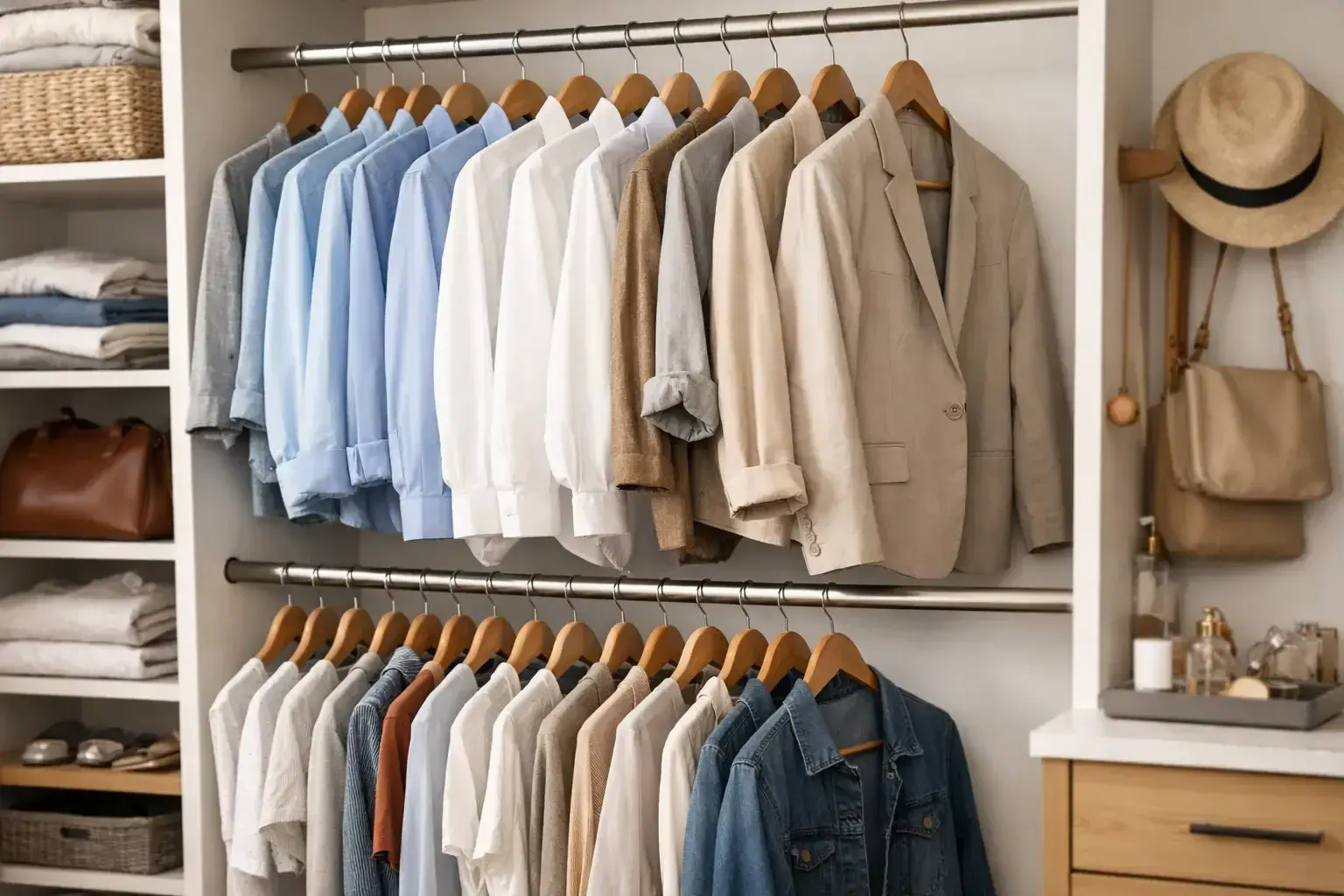
The wrong closet rod height creates a frustration you feel twice a day: hangers scrape the shelf above, dresses brush the floor, or the upper rod is so high that getting dressed requires a stretch. A well-designed closet avoids those small points of friction. It places every category of clothing where it is easy to see, reach, and return - so the space feels calmer from the first morning outfit to the last item put away at night.
For most homeowners, there is no single correct measurement. The best height depends on what you wear, who uses the closet, the ceiling height, and how much hanging space you actually need. That is why a custom closet begins with your routines, not a preset configuration.
Start With How You Use Your Closet
Before choosing a dimension, take an honest look at the clothing that needs a home. A closet built around a standard rod height can work well for a wardrobe of shirts, blouses, folded knitwear, and trousers. It will feel inefficient, however, for someone with long dresses, suits, maxi skirts, or a sizable collection of formalwear.
Think in categories rather than in one general pile of hanging clothes. Separate short-hang garments, long-hang garments, pants, jackets, and seasonal pieces. This exercise often reveals that a closet does not need one long rod at all. It may need a compact long-hang section paired with more productive double-hang storage for everyday clothing.
Accessibility matters just as much. A tall adult may be comfortable with an upper rod near 80 inches, while that same placement can make daily use difficult for a shorter partner, a teenager, or an older family member. The goal is not to use every possible inch at the expense of comfort. It is to make the most frequently used items effortless to reach.
Standard Closet Rod Height Dimensions
Measurements are typically taken from the finished floor to the center of the rod. The exact placement should also account for the thickness of the rod, hanger size, shelf depth, and the vertical clearance a garment needs. These common ranges provide a helpful starting point.
Single Rods for Long-Hang Clothing
A single rod for dresses, coats, long skirts, and longer jackets is often installed around 66 to 72 inches from the floor. This allows most full-length garments to hang freely without touching the floor or becoming creased at the hem.
A shorter dress collection may work comfortably at the lower end of that range. For formal gowns, long coats, or tall garments, a designer may raise the rod or create a dedicated long-hang bay with added clearance. The necessary space is determined by the longest item you plan to hang, not the average item in the closet.
Double-Hang Rods for Everyday Clothing
Double-hang sections are among the most efficient ways to add capacity in a reach-in or walk-in closet. A common configuration places the lower rod around 40 to 42 inches from the floor and the upper rod around 80 to 84 inches from the floor.
This arrangement is ideal for shirts, blouses, folded-over pants, skirts, and shorter jackets. It can nearly double the amount of hanging storage in the same wall space, but it is not a fit for every wardrobe. If a double-hang section is used for garments that are too long, the result is crowded hems and a closet that looks disorganized even when it is technically full.
Rod Height for Children's Closets
Children's closets should work for the child now while allowing room for the space to evolve. A lower rod around 36 to 42 inches can make hanging clothes accessible for younger children and encourage independent routines. As they grow, an adjustable or reconfigurable system can shift higher without requiring a complete replacement.
For family homes, this flexibility is especially valuable. A thoughtfully planned closet can begin with low-access storage, then transition into a more mature combination of hanging space, drawers, shelves, and shoe storage over time.
Why the Space Above and Below the Rod Matters
Rod placement is only one part of the equation. The shelf above the rod needs enough clearance for hangers to move without catching. In many closets, allowing roughly 1 to 2 inches between the top of a hanger and the underside of the shelf keeps the area functional and prevents a cramped appearance.
The space below matters too. Shoes, hampers, drawers, or cabinetry beneath a rod can be useful, but only when the clothing clears them comfortably. A long-hang section over a bank of drawers may look tailored in a rendering, yet it will not perform well if coat hems bunch against the countertop or drawer top.
Depth deserves the same attention. Most standard hangers need a closet depth of about 24 inches to sit properly behind closed doors. A shallow reach-in closet may call for a different strategy, such as open storage, carefully selected hangers, or a layout that puts shelves and drawers where they can do more work than a poorly fitted rod.
Choosing Closet Rod Height in Walk-Ins and Reach-Ins
Walk-in closets give you more freedom to create zones. You may reserve one wall for double hanging, dedicate another to long garments, and use a central island or lower cabinetry for folded items and accessories. The benefit is not simply more storage. It is a more intuitive path through the space, with each category visible and within reach.
Reach-in closets require a more selective approach. Every inch must earn its place. In a smaller closet, double hanging is often valuable, but a narrow long-hang section can prevent dresses and coats from overwhelming the entire layout. Drawers can also reduce the need for excessive rod space by giving T-shirts, workout clothes, swimwear, and undergarments a defined home.
For South Florida homeowners, a wardrobe may lean heavily toward lightweight shirts, dresses, resort wear, and seasonal layers rather than bulky winter coats. That can make double hanging especially effective. Still, occasional formal dresses, blazers, or travel outerwear deserve proper clearance. A good design reflects the clothing you wear most often without ignoring the pieces you need at specific moments.
Common Mistakes That Make a Closet Feel Smaller
The most common mistake is treating all hanging clothes as if they require the same clearance. A single rod installed high across the full width of a closet wastes valuable vertical space when much of the wardrobe consists of short items. The opposite mistake is forcing every garment into double hanging, which leaves longer pieces dragging or folded at the bottom.
Another issue is designing around an empty closet rather than the homeowner's actual inventory. A layout should account for how many linear inches of hanging space you need, how many pairs of shoes you own, and whether folded clothes are better served by drawers or open shelving. The right closet rod height works alongside those decisions, not independently from them.
Finally, avoid putting everyday items out of comfortable reach simply because the ceiling is tall. Upper storage has a role, particularly for luggage, seasonal bins, and seldom-used items. But the clothes worn every week should not require a step stool or a workaround.
Custom Design Makes the Measurements Work Harder
A custom closet is not about following a universal chart. It is about turning practical dimensions into a space that feels made for you. During the design process, a professional can evaluate ceiling height, door swing, closet depth, existing obstructions, and the proportions of your wardrobe before finalizing rod placement.
At Closets Beyond, that planning can be visualized before installation, allowing homeowners to see how long-hang, double-hang, shelving, drawers, and specialty storage will work together. Materials, finishes, and hardware bring the polished appearance, but the underlying measurements are what make the finished closet easy to live with.
The best closet rod height is the one that lets you open the door, find what you need, and put everything back without a second thought. When every garment has proper clearance and a natural place to belong, organization stops feeling like another task and becomes part of a smoother daily routine.
See your space in 3D before anything is built.
Every consultation includes a 3D design of your space. Your designer measures, plans it with you and gives you a quote that fits your budget.
- 5.0 from 24 Google reviews
- Lifetime guarantee on our imported materials
954-213-5836Open Mon–Sat 8–6