10 Custom Pantry Storage Ideas That Work
Closets Beyond6 min read
The problem with most pantries is not that they are too small. It is that they were never designed for the way your household actually shops, cooks, and stores essentials. The best custom pantry storage ideas solve that mismatch. They turn wasted corners, awkward depths, and crowded shelves into a system that feels calm, efficient, and tailored to your daily routine.
A well-designed pantry should do more than hold groceries. It should make mornings faster, meal prep easier, and cleanup less frustrating. That is where custom design stands apart from off-the-shelf organizers. Instead of forcing your habits into a standard layout, a custom pantry is built around what you buy, how often you cook, and what kind of access you want every day.
Why custom pantry storage ideas make such a difference
In many homes, pantry frustration comes down to visibility and reach. Deep shelves swallow small items. Tall vertical space goes unused. Bulk goods take over the floor. A pantry can look full even when it is not working hard.
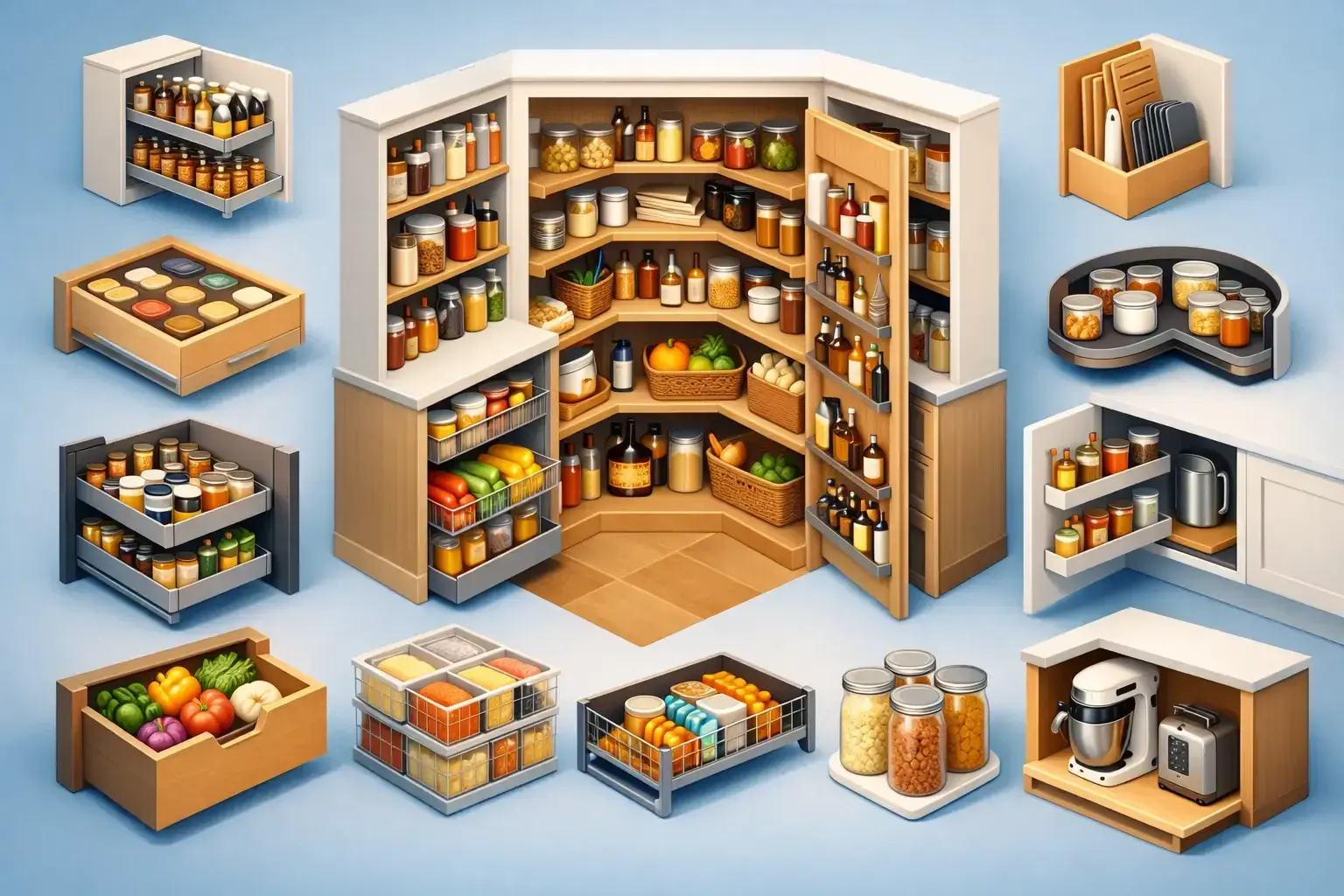
Custom planning fixes that by assigning purpose to every inch. Shelving heights can be adjusted to fit cereal boxes, snack bins, small appliances, or oversized serving pieces. Drawers can replace hard-to-reach lower shelves. Narrow pull-outs can turn slim gaps into practical storage. The result is not just a cleaner pantry. It is a kitchen that functions more smoothly because the storage finally supports the household.
There is also an aesthetic benefit. When materials, finishes, and proportions are chosen intentionally, the pantry feels like a natural extension of the kitchen rather than an afterthought. For design-conscious homeowners, that visual consistency matters just as much as organization.
Custom pantry storage ideas for everyday use
Adjustable shelving for changing needs
Pantries rarely stay the same year after year. A family with young children may need easy-access snack space now and more baking storage later. Adjustable shelves give the system room to evolve. That flexibility matters because fixed shelves often create too much dead space above short items and not enough room for tall containers.
The key is thoughtful spacing. Everyday goods should sit at eye level where they are easy to grab. Less-used serving pieces or backstock can go higher. Lower zones should be reserved for heavier items that are safer to lift from waist height or below.
Pull-out drawers instead of deep bottom shelves
Lower shelves are where good pantry intentions go to disappear. Once cans, bags, and containers stack up, the back half becomes invisible. Pull-out drawers change that completely. They bring contents forward, reduce bending and digging, and make inventory easier to manage.
This is especially useful for dry goods, snacks, and packaged ingredients that tend to shift around. Clear organization is not only about neatness. It can also help reduce overbuying because you can see what you already have.
Vertical dividers for trays, cutting boards, and platters
Flat items are notoriously awkward to store. When they are stacked horizontally, you usually have to unpile everything to reach one piece. Vertical dividers create clean, accessible slots for baking sheets, serving trays, cooling racks, and cutting boards.
This kind of detail may seem small, but it has an outsized impact on daily use. It protects larger kitchen pieces, keeps them visible, and frees up shelf space for items that are better stored flat.
Built-in bins for snacks and grab-and-go items
Families often struggle with pantry clutter because small packaged foods spread across multiple shelves. Built-in bins or open-front cubbies give those items a defined home. They also make it easier for children or guests to find what they need without disrupting the entire pantry.
There is a balance to strike here. Too many open bins can start to look busy, especially with colorful packaging. A cleaner approach is to group categories intentionally and keep the most visually active items behind cabinet doors or in coordinated containers when possible.
Dedicated zones for small appliances
Pantries increasingly do more than store food. They often house blenders, mixers, air fryers, coffee gear, or serving equipment used for entertaining. Custom cabinetry allows these appliances to be stored where they are protected, accessible, and not competing with everyday grocery storage.
If you use an appliance often, shelf height and depth should be planned around it. If it is heavy, pull-out shelving can make access easier. This is one of those areas where custom design pays off quickly. Standard pantry dimensions do not always accommodate real appliance sizes well.
Smart layouts for difficult pantry spaces
Corner storage that does not waste square footage
Corners can become dead zones if the shelving is too deep or the access is too awkward. In a walk-in pantry, wraparound shelving works best when the corner is planned for larger or less frequently used items. In a cabinet-style pantry, specialized pull-out hardware or angled shelving can recover space that would otherwise go unused.
Not every corner needs a complex mechanism. Sometimes a simpler design is better if it improves durability and makes cleaning easier. The right answer depends on the pantry size, the homeowner's priorities, and how much hidden storage is actually helpful.
Narrow pull-outs for spices, oils, and bottled goods
Slim pull-out units can transform spaces that are often ignored, especially near refrigerators or at the end of cabinet runs. These are ideal for spices, vinegars, cooking oils, canned drinks, or other narrow items that are hard to line up neatly on standard shelves.
What makes them effective is visibility. Instead of rows of bottles getting lost behind one another, a pull-out presents everything in a single glance. That saves time and keeps duplicate purchases to a minimum.
Floor-level storage for bulk items
Bulk paper goods, beverages, and oversized pantry staples need a home, but they should not consume your prime storage zones. Floor-level compartments or reinforced lower drawers create a practical area for heavy or high-volume items without cluttering the rest of the pantry.
This is particularly useful for busy households and frequent entertainers. It keeps overflow contained while preserving the upper shelves for products used every day.
Materials and features that elevate the space
The best custom pantry storage ideas are not only about layout. Materials matter too. Durable shelving, quality drawer hardware, and finishes that coordinate with the kitchen all contribute to a pantry that looks polished and performs well over time.
In humid climates like South Florida, durability becomes even more important. Materials should handle regular use and changing conditions without warping, sagging, or losing their finish. Premium construction is not just a luxury detail. It protects the investment and helps the pantry continue to function beautifully for years.
Lighting also deserves attention. Even the most organized pantry feels frustrating if the back corners are dim. Integrated lighting can improve visibility dramatically and make the space feel more refined. It is one of the simplest ways to elevate both function and appearance.
How to choose the right custom pantry storage ideas for your home
The strongest pantry designs begin with behavior, not trends. A household that cooks daily needs a different layout than one that relies on prepared foods or entertains often. If you buy in bulk, your pantry should prioritize capacity and weight support. If you prefer a visually clean kitchen, concealed storage and consistent containers may matter more.
This is why professional planning is so valuable. A good designer looks beyond inspiration photos and asks practical questions. What do you need within reach? What creates clutter now? Which items deserve dedicated space? Those answers shape a pantry that feels effortless once it is installed.
It also helps to think beyond the pantry itself. In some homes, the most effective solution includes adjacent cabinetry, a beverage station, or kitchen storage that shifts some categories out of the pantry entirely. When the home is considered as a whole, the final design usually works better.
Closets Beyond approaches pantry design this way - as part of a larger effort to create order, improve daily routines, and bring a more finished feel to the home. That broader perspective matters when you want storage that does not just fit the room, but fits the way you live.
A pantry should make life easier the moment you open the door. When every shelf, drawer, and divider has a purpose, the space feels lighter, the kitchen works harder, and everyday routines become far less demanding.
See your space in 3D before anything is built.
Every consultation includes a 3D design of your space. Your designer measures, plans it with you and gives you a quote that fits your budget.
- 5.0 from 24 Google reviews
- Lifetime guarantee on our imported materials
954-213-5836Open Mon–Sat 8–6