
How to Choose Closet Finishes for Lasting Style
Closets Beyond7 min read
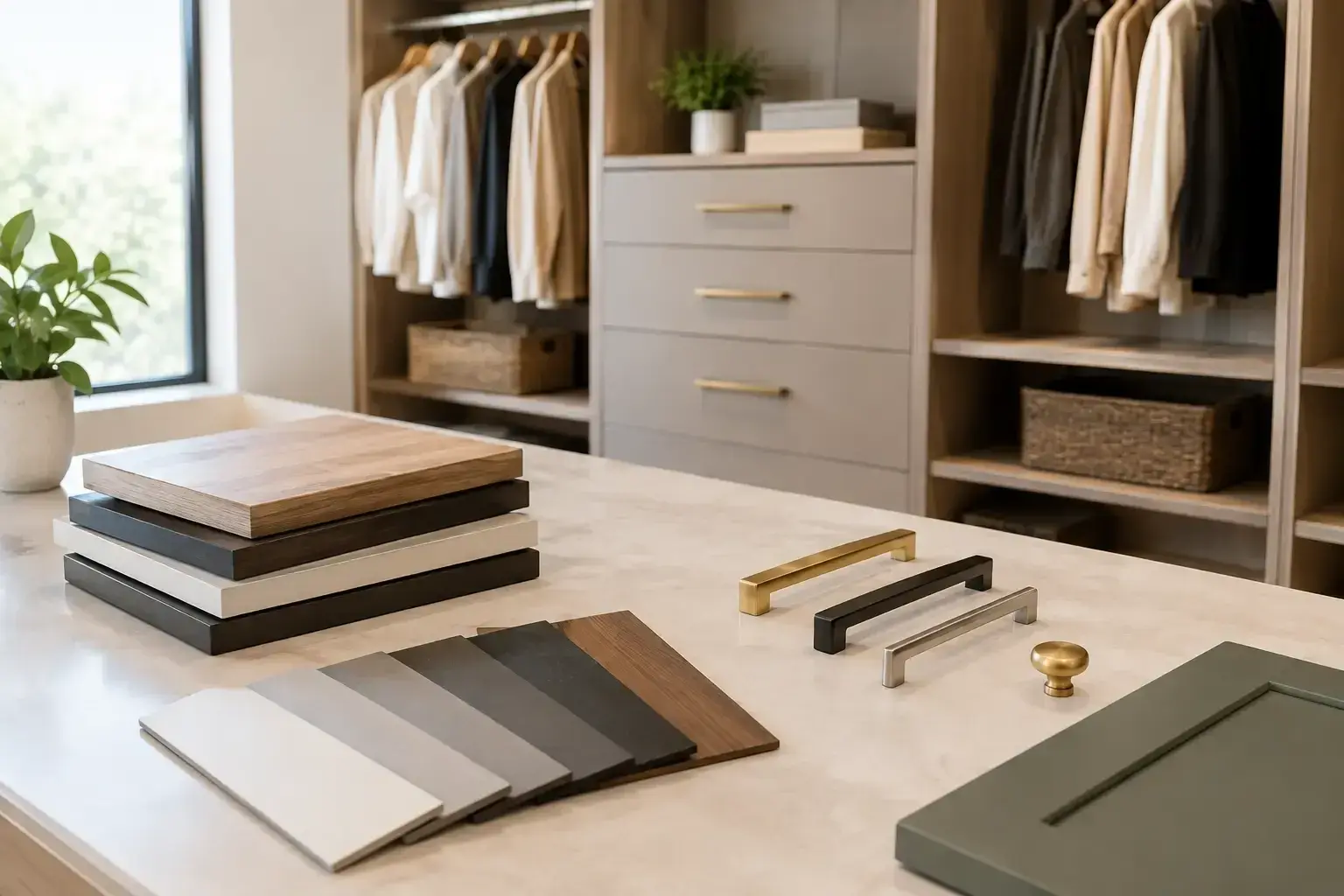
A closet can be perfectly organized on paper and still feel unfinished when the materials do not suit the room, the home, or the way you live. When you choose closet finishes, you are deciding more than color. You are setting the visual tone of a space you use at the beginning and end of nearly every day.
The right finish makes a compact reach-in closet feel brighter, gives a walk-in closet the presence of a tailored dressing room, and keeps a hardworking family storage space looking composed. The best choice is rarely just the trendiest one. It is the one that supports your routine, coordinates with the surrounding home, and holds up gracefully over time.
Start With How the Closet Will Be Used
A primary walk-in closet, a child’s closet, and a garage storage system should not be specified the same way. Before considering samples, think about who uses the space, what they store, and how much wear the surfaces will receive.
A primary closet may call for warm wood tones, refined neutrals, glass-front drawers, and decorative hardware that feels at home with the bedroom’s furnishings. A shared family closet might benefit from a lighter, more forgiving finish that makes it easy to find clothing and accessories during busy mornings. In a garage, mudroom, or laundry room, durability and easy cleaning generally take priority over a furniture-inspired look.
Also consider your habits. If you regularly bring in shoes from outdoors, store sports gear, or place handbags directly on shelves, choose surfaces that resist scuffs and wipe clean without special care. If the closet is mainly dedicated to folded linens or formal clothing, you may have more freedom to prioritize visual richness and detail.
Choose Closet Finishes That Support the Room
Your closet does not need to match the adjacent bedroom or hallway exactly. It should, however, feel connected. A finish that clashes with nearby flooring, wall color, or millwork can make even a well-designed storage system appear like an afterthought.
Start by identifying the dominant undertone in the room. Floors and furniture often lean warm, cool, or neutral. Warm oak flooring pairs naturally with creamy whites, soft taupes, caramel wood grains, and muted greige. Cool gray tile or crisp contemporary furnishings may work better with clean white, pale gray, charcoal, or subdued ash-inspired tones.
South Florida homes often benefit from finishes that reflect natural light and maintain an open, airy feel. Soft white, sand, light oak, and tailored greige can feel polished without becoming overly formal. In a darker interior or a room with limited daylight, a deep espresso or black finish can be striking, but it should be balanced with thoughtful lighting and lighter wall colors.
If you are renovating multiple areas, consistency matters even more. Repeating one or two complementary finishes across closets, a home office, pantry, beverage station, or wall unit creates a more intentional whole-home experience. The finishes do not need to be identical. They simply need to belong to the same design conversation.
Consider What the Finish Will Show
Every finish has a practical side. Bright white creates a clean, expansive appearance, but it can show makeup marks, denim transfer, and dust more readily than a mid-tone neutral. Very dark finishes conceal some stains, yet fingerprints and lighter dust can be more visible, especially on glossy surfaces.
Wood-look finishes add warmth and often disguise minor everyday marks well because of their natural variation. Solid-color finishes feel clean and architectural, making them a strong fit for modern homes, but their maintenance needs depend on the specific color and sheen. A design consultation should include real samples viewed in the room itself, not only under showroom lighting.
Think Beyond the Main Cabinet Color
A refined closet usually has more than one finish decision. The cabinet body may establish the foundation, while drawer fronts, backing panels, hardware, rods, lighting, and glass details shape the finished look.
For a calm, classic result, use one primary finish throughout and add contrast through hardware and lighting. Brushed nickel, matte black, warm brass, and champagne-toned hardware can each change the personality of the same cabinet color. Brushed nickel feels timeless and versatile. Matte black introduces crisp definition. Warmer metals bring a more decorative, elevated feel.
For added dimension, consider a two-tone design. Light cabinetry with a wood-grain island, a darker drawer bank, or a contrasting backing panel can create visual depth without overwhelming the room. This approach works particularly well in larger walk-in closets, where a single finish may feel flat across long walls of cabinetry.
Glass-front drawers and doors deserve their own consideration. They can turn handbags, shoes, watches, or folded garments into a visual feature, but they also ask for more consistent organization. If you prefer a space that looks polished with minimal daily styling, use glass selectively for a favorite collection and choose solid fronts for the rest.
Let Lighting Influence Your Decision
Lighting can make a finish look warmer, cooler, richer, or flatter than expected. It also determines how easily you can distinguish navy from black, see garment textures, and locate accessories before leaving the house.
Integrated LED lighting under shelves, inside cabinets, or along hanging sections adds function while giving the closet a more finished architectural appearance. It is particularly helpful with darker finishes and deeper cabinet interiors. A light finish may need less supplemental illumination, but it still benefits from well-planned lighting around drawers, mirrors, and dressing areas.
Ask to view material samples under lighting similar to what will be installed. Natural daylight, overhead fixtures, and LED cabinet lighting can all affect the result. This small step prevents the common disappointment of selecting a gray that reads blue or a warm white that appears yellow after installation.
Balance Current Style With Long-Term Appeal
Closet finishes should feel personal, but a custom system is also a long-term investment in your home. A highly specific color or dramatic pattern can be beautiful when it genuinely reflects your style. The question is whether you will enjoy seeing it every day for years to come.
For most homeowners, the strongest approach is to choose a timeless base and express personality through elements that are easier to update. Neutral cabinetry, warm wood tones, and classic hardware offer flexibility as bedroom furnishings, paint colors, and decorative preferences change. Statement lighting, hardware, wallpaper, or an accent backing can provide the distinctive touch.
That does not mean every closet needs to be white. A deep walnut-inspired finish can feel enduring in a traditional home. Charcoal can be sophisticated in a contemporary residence. The difference lies in choosing a color that belongs to the architecture and your lifestyle rather than selecting it solely because it is popular at the moment.
Do Not Overlook Texture and Sheen
Texture is often what makes custom cabinetry feel considered rather than generic. A subtle wood grain brings movement and warmth. A smooth matte surface feels contemporary and soft under changing light. Higher-sheen finishes can look sleek, although they typically reveal fingerprints more easily and may feel less forgiving in high-touch zones.
For a closet used by several family members, matte and textured finishes are often practical choices. In a more formal dressing area, a smoother surface, decorative drawer fronts, or a polished accent can create a more luxurious effect. The ideal combination depends on whether the room should feel understated, expressive, or somewhere in between.
Work With the Space You Have
Finish choices can visually reshape a closet. Light colors tend to make narrow reach-in closets and small dressing rooms feel more open. Matching the cabinet finish closely to the wall color can create a built-in effect that reduces visual clutter. In contrast, a darker finish can add depth and purpose to a spacious walk-in closet with ample lighting.
For low ceilings or limited natural light, avoid layering several dark elements at once. Dark cabinetry, dark floors, and dark walls can be dramatic, but they require careful lighting and enough open space to avoid a closed-in feeling. A designer can use 3D visualization to test these relationships before production begins, helping you see whether a finish will feel balanced at full scale.
Closets Beyond approaches finish selection as part of the complete design, not a final detail chosen after the layout is set. When cabinetry, storage zones, lighting, and hardware are planned together, the result is easier to use and more satisfying to come home to.
Make the Final Choice With Real Samples
Digital renderings are valuable, but physical samples still matter. Hold them next to your flooring, paint, bedding, and furniture. View them in morning light and at night. Notice whether a finish feels calm, too cool, too yellow, or unexpectedly dark in your own home.
Narrow your choices to two or three strong options rather than collecting dozens of possibilities. Then let function make the final decision. The finish that looks beautiful and suits the demands of your daily routine is usually the one you will appreciate longest.
A well-finished closet does more than contain belongings. It gives each morning a clearer starting point and makes the private spaces of your home feel as thoughtfully designed as the rooms your guests see.
See your space in 3D before anything is built.
Every consultation includes a 3D design of your space. Your designer measures, plans it with you and gives you a quote that fits your budget.
- 5.0 from 24 Google reviews
- Lifetime guarantee on our imported materials
954-213-5836Open Mon–Sat 8–6