12 Kids Closet Organization Ideas That Work
Closets Beyond6 min read
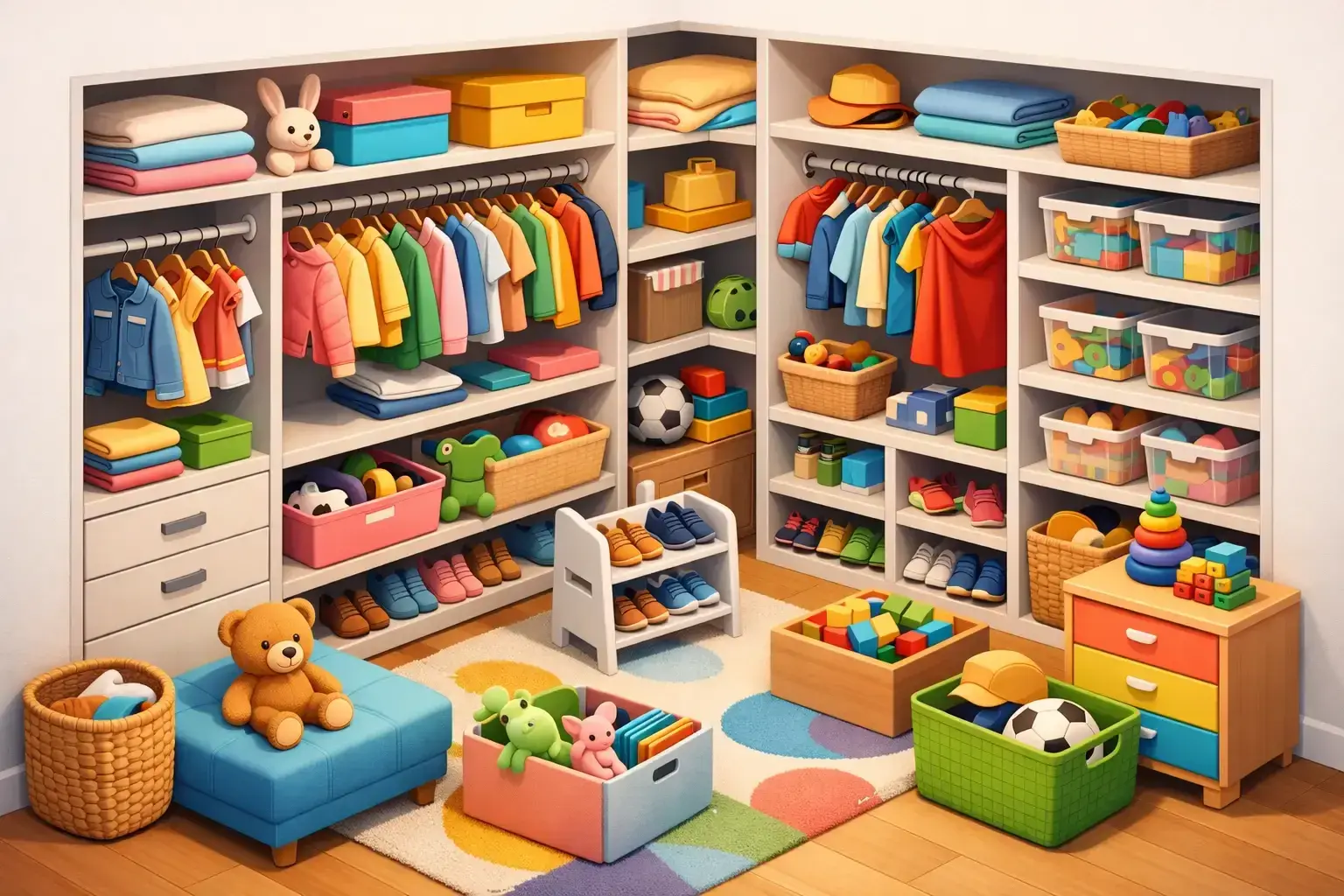
A child’s closet usually stops working long before the room does. Tiny hanging rods become wasted space, shoes pile up under dresses and sports uniforms, and the top shelf turns into a holding zone for everything that does not fit anywhere else. The best kids closet organization ideas solve that problem at the source by giving each stage of childhood a layout that feels easy to use now and flexible enough to grow later.
For families, that matters more than it sounds. A well-designed kids closet is not just about putting things away. It can make school mornings faster, reduce clutter in the rest of the bedroom, and help children build simple habits around getting dressed, putting laundry away, and finding what they need without calling for help. When the storage is planned well, the room feels calmer and more polished with less daily effort.
Start with how your child actually uses the closet
Before choosing bins, shelves, or drawer layouts, it helps to look at what the closet needs to hold right now. A toddler may need low rods, open cubbies, and easy basket access. A grade-school child usually needs more space for folded clothes, shoes, backpacks, and seasonal extras. A teen may need a more refined mix of hanging space, drawers, and accessories storage.
This is where generic systems often fall short. A single rod and one top shelf may technically store clothing, but it rarely supports the routine of a real family. Custom planning creates better proportions. Shorter hanging sections make sense for smaller clothes. Lower shelves let kids reach everyday items. Closed drawers create a cleaner look and contain the visual clutter that can make even an organized room feel messy.
Kids closet organization ideas that make daily life easier
Use double hanging to maximize vertical space
One of the simplest ways to improve a child’s closet is to replace a single long-hang section with two stacked rods. Because children’s clothing is shorter, most closets can comfortably fit tops or jackets above and pants or more tops below. This instantly increases hanging capacity without increasing the footprint.
There is one trade-off. Double hanging works best for younger children with smaller garments. As clothing gets longer, part of the closet should shift to single hanging so dresses, uniforms, and larger items are not cramped. A flexible design accounts for that change early, rather than forcing a full redo later.
Add adjustable shelving instead of fixed stacks
Shelves are useful, but fixed shelves can become frustrating fast in a child’s closet. Clothing sizes change, toy storage needs come and go, and one season may require room for bulky sweaters while another needs space for sandals and swimwear. Adjustable shelving gives the closet room to evolve.
It also creates a cleaner visual rhythm. Instead of overstuffed piles, you can set shelf heights around real categories such as jeans, pajamas, keepsakes, or extra bedding. That kind of structure makes maintenance more realistic for busy households.
Include drawers to hide the messy categories
Not everything belongs on a shelf. Socks, underwear, swimsuits, hair accessories, and small seasonal items often create clutter when left in open bins. Built-in drawers keep those categories contained and easy to sort.
For many families, drawers also make the room feel more finished. Open shelving can work beautifully, but too much of it puts every item on display. A mix of drawers and shelves usually creates the right balance between access and appearance.
Keep everyday items at child height
Some of the most effective kids closet organization ideas are about placement, not just products. If your child can reach favorite shirts, school shoes, or a backpack without help, the closet becomes more functional right away. Independence starts with design that matches the user.
That does not mean everything should be low forever. It means the most frequently used items should live in the most convenient zone. Higher shelves can hold out-of-season clothing, keepsakes, or backup supplies that adults access only occasionally.
Make room for more than clothes
Plan storage for shoes, backpacks, and activity gear
A child’s closet usually does more than hold clothing. It often becomes the landing zone for school bags, dance shoes, cleats, costumes, and weekend gear. If the design ignores those items, they spill into the bedroom floor or hallway.
Dedicated shoe shelving keeps pairs visible and easier to put away. A cubby for backpacks or totes prevents bulky items from crowding hanging clothes. If your child plays sports or rotates through multiple after-school activities, a few larger compartments can be far more useful than trying to fit everything into standard shelving.
Use labeled zones for simpler routines
Labels may sound small, but they can make a closet much easier to maintain. A designated drawer for pajamas or a shelf for school uniforms removes the guesswork from mornings and cleanup. Younger children respond especially well to clear visual categories.
The key is not to overcomplicate it. Five intuitive zones work better than fifteen narrow ones. Storage should feel obvious enough that everyone in the house can put things back correctly.
Design for growth, not just today
Build in flexibility for changing sizes and stages
Children grow quickly, and their closets should not need replacing every few years. A thoughtful layout leaves room to shift rod heights, reconfigure shelves, and adapt drawers as clothing and routines change. This is one of the strongest cases for custom design. It is easier to plan for the next stage from the beginning than to keep patching a layout that never fit properly.
A nursery closet, for example, may start with baskets, baby essentials, and short hanging sections. Later, that same footprint can support school clothes, books, and shoe storage with a different internal configuration. The exterior footprint stays the same, but the usability improves dramatically.
Choose finishes that feel polished beyond childhood
A kids closet should still feel like part of the home. Bright novelty finishes may seem fun at first, but many families prefer clean, durable materials that age well with the room. Neutral finishes, quality hardware, and a balanced layout tend to deliver longer-lasting value.
That approach also supports resale and broader home appeal. Even though the closet is designed for a child, it should still reflect the same level of craftsmanship as the rest of the house. Well-made storage adds function, but it also contributes to the overall look and feel of the room.
When custom kids closet organization ideas make the biggest difference
There is a point where a basic add-on system no longer solves the real issue. If the closet has awkward dimensions, limited depth, angled ceilings, or not enough usable storage for the room, customization can transform the entire experience. The same is true if multiple children share one closet or if the bedroom depends heavily on closet storage because furniture space is limited.
Custom design becomes especially valuable when families want the closet to support both organization and aesthetics. Integrated drawers, tailored shelving, premium finishes, and a layout built around actual routines create a result that feels intentional rather than improvised. At Closets Beyond, that process is often guided by in-home planning and 3D visualization, which helps homeowners see how the space will function before installation begins.
A few mistakes to avoid
The most common mistake is designing around ideal behavior instead of real life. If your child is unlikely to fold shirts into perfect stacks, open shelves may need to be balanced with drawers. If mornings are rushed, the closet needs visibility and easy access more than decorative containers.
Another issue is overcommitting to one stage. Low rods are useful for younger children, but if every component is fixed in place, the closet may lose function quickly. Good design is rarely about squeezing in the maximum amount of storage. It is about creating the right mix of access, flexibility, and order.
Finally, avoid treating the closet as an afterthought compared with the bedroom itself. A beautiful room still feels chaotic when the closet cannot support daily routines. When the interior storage works well, the whole space feels more finished.
Why the best closets feel easier, not busier
The strongest kids closet organization ideas are usually the ones that remove friction. Clothes are visible. Shoes have a place. Drawers catch the small items. Shelves adjust when needs change. Nothing feels forced, and the room stays cleaner without constant intervention.
That is the real goal - not a picture-perfect closet that lasts one weekend, but a space designed around how your family lives. When the storage fits the child, the room works harder, mornings run smoother, and order starts to feel natural instead of exhausting.
A child’s closet should not be something you keep fixing. With the right design, it becomes one of the easiest parts of the room to live with.
See your space in 3D before anything is built.
Every consultation includes a 3D design of your space. Your designer measures, plans it with you and gives you a quote that fits your budget.
- 5.0 from 24 Google reviews
- Lifetime guarantee on our imported materials
954-213-5836Open Mon–Sat 8–6