
Laminate Versus Plywood Cabinetry Compared
Closets Beyond7 min read
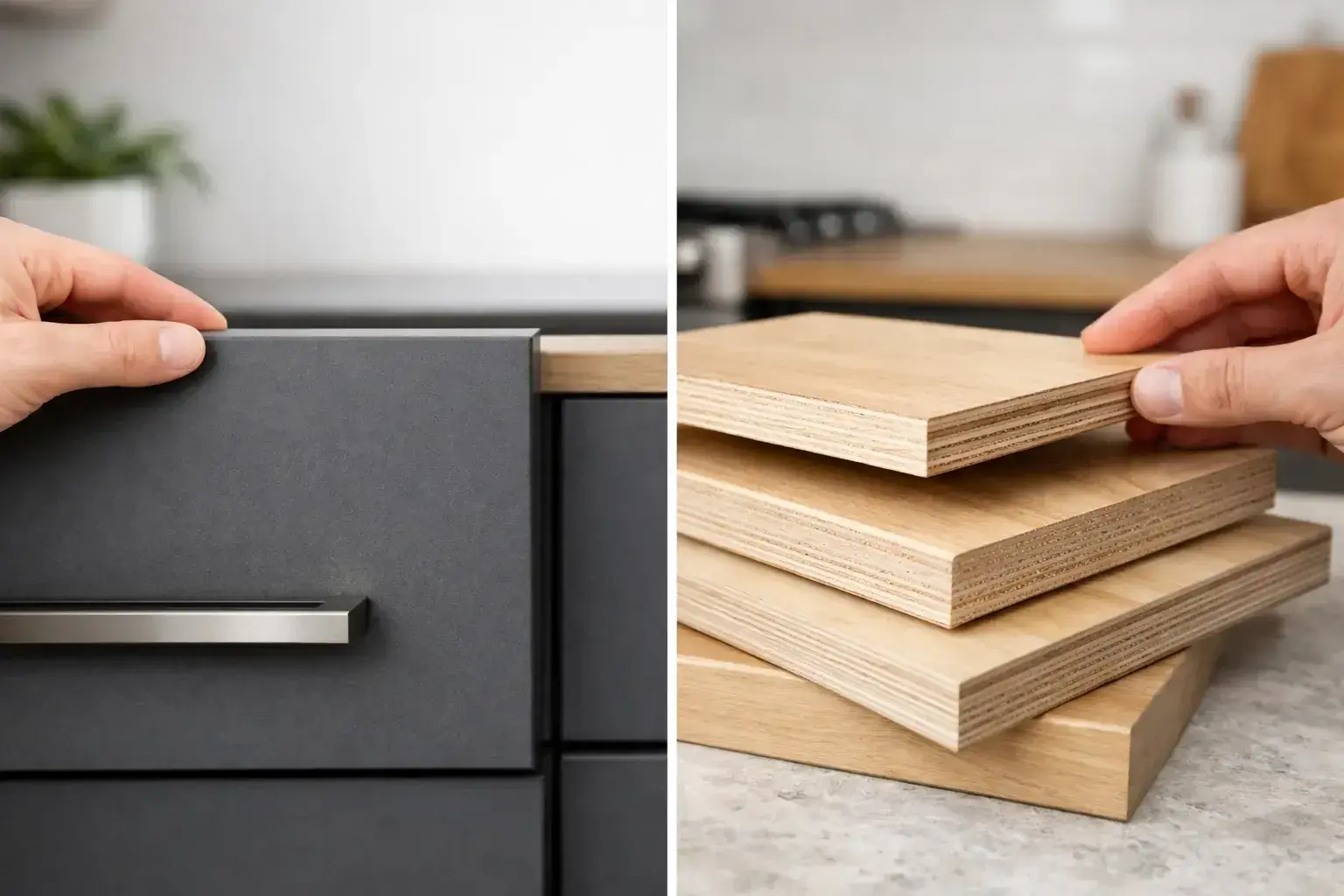
A closet cabinet can look flawless on installation day and still disappoint years later if its material does not suit the room, the climate, or the way your household lives. The laminate versus plywood cabinetry decision is not simply about choosing a premium option or a budget option. It is about selecting the right structure and finish for the storage system you will use every day.
For custom closets, pantries, home offices, garages, and entertainment centers, both materials can create a polished, high-functioning result. The better choice depends on where the cabinetry will live, how much wear it will receive, and which design details matter most to you.
What laminate cabinetry really means
“Laminate cabinetry” can describe a few different constructions, which is why material conversations deserve more than a quick price comparison. In many custom storage systems, the cabinet box is engineered wood, such as particleboard or MDF, finished with a durable decorative laminate surface. Thermally fused laminate, often called TFL, is commonly used for closet cabinetry because it provides a consistent, easy-care finish in a wide range of colors and woodgrain looks.
High-pressure laminate is another option. It is generally thicker and more impact-resistant than standard decorative surfaces, making it a strong candidate for busy spaces such as garages, laundry rooms, and work areas. The laminate surface is bonded to a core material, so performance depends on both the finish and what is beneath it.
A well-made laminate system offers crisp edges, consistent color, and an exceptionally clean, tailored appearance. It also makes it possible to coordinate drawer fronts, shelving, panels, and trim across an entire room. For homeowners who want a refined built-in look without the maintenance demands of natural wood, laminate can be an excellent fit.
How plywood cabinetry is constructed
Plywood is a panel material made from thin layers of wood veneer bonded together with alternating grain directions. This layered construction gives plywood strength and helps it resist flexing better than many engineered wood products. Cabinet-grade plywood is often used for kitchen cabinetry, vanities, utility-room cabinets, and other applications where strength, screw-holding ability, or exposure to changing conditions are priorities.
Plywood is not automatically the visible finish. It may be painted, stained, covered with veneer, or finished with laminate. A homeowner can choose plywood cabinet boxes with laminate fronts, for example, combining a sturdy structural material with the practical benefits of a low-maintenance surface.
Quality varies significantly. The grade of plywood, the adhesive used, the thickness of the panel, and the quality of the edge treatment all affect how a cabinet performs. A plywood box with a poor finish or weak installation is not inherently better than a thoughtfully designed laminate system made with quality components.
Laminate versus plywood cabinetry: the practical differences
The most useful comparison starts with the room itself. A primary bedroom closet has different demands than a garage exposed to heat and humidity, while a beverage station has different risks than a home office wall unit.
Appearance and design flexibility
Laminate delivers reliable visual consistency. Modern collections can recreate warm oak, walnut, linen, matte solids, textured neutrals, and high-gloss finishes with impressive realism. Because the surface is manufactured, every panel can match closely, which helps larger installations feel intentional and cohesive.
Plywood offers a more natural wood character when paired with a clear finish or wood veneer. Its grain variation can be a feature for homeowners who prefer organic texture and handcrafted detail. However, exposed plywood edges need careful treatment. Without edge banding, solid-wood edging, or another finished detail, the visible plies can look utilitarian rather than elevated.
For a sleek dressing room, a contemporary home office, or an expansive reach-in closet, laminate often provides the more controlled, furniture-like aesthetic. For cabinetry where authentic wood grain is central to the design, plywood can offer a richer starting point.
Durability in daily use
Both materials can serve a home well, but they respond differently to impact, weight, and moisture. Quality laminate surfaces resist routine scratches, stains, and cleaning products. They are easy to wipe down after daily use, which is valuable in closets, pantries, and kids’ spaces.
Plywood has an advantage in structural strength and screw retention. It is often a wise selection for heavy floating shelves, deep drawers filled with dense items, or cabinetry that needs to support substantial hardware. Proper cabinet engineering still matters. Shelf span, thickness, reinforcement, and mounting method determine whether a system holds its shape over time.
A laminate cabinet can be highly durable when designed with suitable panel thickness, reinforced long spans, quality edge banding, and professional installation. Conversely, plywood may dent, chip, or show finish wear if its face veneer is thin or poorly protected.
Moisture and South Florida conditions
Humidity is part of life in South Florida, and material selection should respect that reality. Neither standard particleboard nor standard plywood should be left exposed to standing water or persistent leaks. Swelling, delamination, and finish damage can occur when any wood-based panel is repeatedly saturated.
For climate-controlled closets and living areas, a high-quality laminate storage system is often a practical and attractive solution. In laundry rooms, garages, bathrooms, or areas near plumbing, the details deserve closer attention. Moisture-resistant cores, sealed edges, appropriate ventilation, elevated bases where needed, and careful placement away from water sources all help protect the investment.
Plywood is generally more forgiving than standard particleboard when humidity fluctuates, especially when it is properly sealed. Yet it is not a substitute for correcting a leak, improving ventilation, or managing condensation. The right material works alongside the right room conditions.
Cost and where to invest
Laminate cabinetry is typically more cost-efficient than plywood cabinetry, particularly across a large custom closet or whole-home storage project. It offers a broad range of finishes and a premium, finished appearance while helping keep the investment focused on the elements you will feel every day: better layout, more usable storage, quality drawer hardware, integrated lighting, and thoughtful accessories.
Plywood usually carries a higher material cost and can require more labor to finish well. That added investment can make sense in high-load, moisture-prone, or highly customized applications. It may be less necessary for a standard bedroom closet with well-supported shelves and a controlled indoor environment.
The goal is not to specify the most expensive material everywhere. It is to invest strategically. A garage workstation, a vanity surround, and a large wall-mounted media unit may call for different construction choices, even when they share a cohesive design language.
Where each material tends to work best
Laminate cabinetry is especially well suited to walk-in closets, reach-in closets, pantries, home offices, wall units, entertainment centers, and bedroom built-ins. These spaces benefit from its finish variety, easy upkeep, and clean visual continuity. It is also a strong choice for families who want storage that stays polished with minimal maintenance.
Plywood cabinetry is often worth considering for kitchen cabinets, bathroom-adjacent cabinetry, garage storage, workstations, utility areas, and shelves designed for unusually heavy loads. It can also be the preferred route when the design calls for stained wood, exposed natural edges, or a more architectural wood finish.
There is plenty of room for a hybrid approach. A custom design may use plywood where structural demands are greatest, laminate for visible panels and drawer fronts, and upgraded hardware throughout. This approach can deliver lasting performance without making material choices feel all-or-nothing.
The construction details that matter as much as the material
Homeowners often focus on laminate or plywood first, but several details have an equally meaningful effect on cabinet longevity. Edge banding protects vulnerable panel edges and gives laminate cabinetry a finished appearance. Full-extension drawer slides improve access and prevent the frustration of drawers that bind or sag. Proper anchoring keeps tall units stable, while correctly sized shelves prevent bowing under everyday weight.
Door and drawer alignment, ventilation around mechanical areas, toe-kick design, and the ability to access plumbing or electrical components also matter. These are the decisions that separate cabinetry that merely fills a wall from a system that supports your routine for years.
A professional design process makes those choices easier. With in-home measurements and 3D visualization, you can see how finishes, shelf spacing, drawers, hanging sections, and accessories will work together before production begins. That clarity helps ensure the selected material supports the life you actually lead, not just the look you saved for inspiration.
Choose for the room, not the label
Laminate versus plywood cabinetry is best viewed as a design and performance decision, not a contest with one universal winner. Laminate is often the smart, polished choice for climate-controlled storage and built-ins where finish consistency and easy care lead the conversation. Plywood earns its place where added structural resilience, natural wood character, or greater moisture tolerance is needed.
At Closets Beyond, the best result begins with understanding how a space needs to function, from the first morning rush to the last item put away at night. Choose cabinetry that makes those daily moments feel lighter, more organized, and distinctly at home.
See your space in 3D before anything is built.
Every consultation includes a 3D design of your space. Your designer measures, plans it with you and gives you a quote that fits your budget.
- 5.0 from 24 Google reviews
- Lifetime guarantee on our imported materials
954-213-5836Open Mon–Sat 8–6