
Laundry Room Storage Solutions That Work
Closets Beyond7 min read
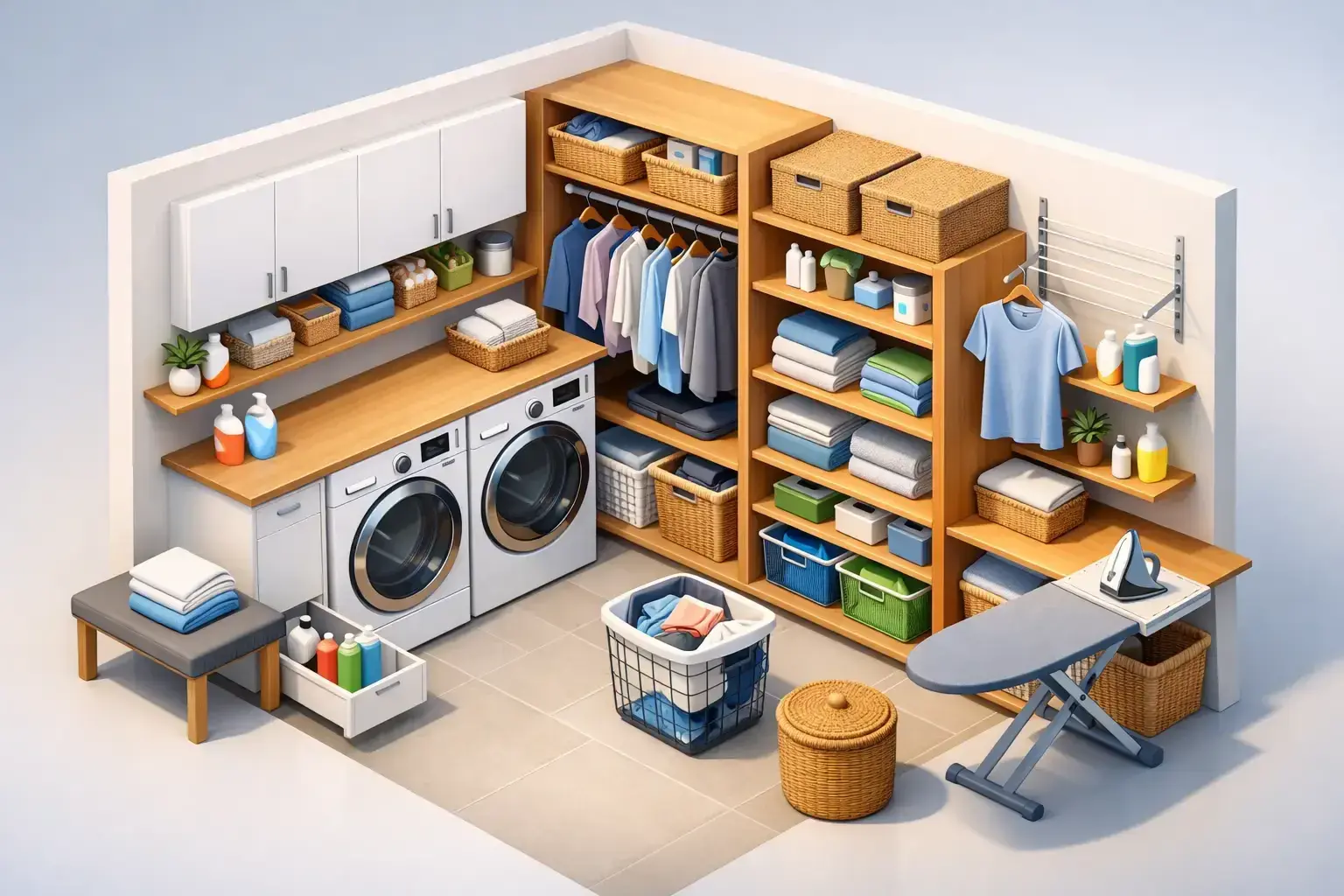
A laundry room rarely stays neat by accident. Detergent bottles crowd the counter, mismatched baskets pile up on the floor, and everyday essentials compete for space in a room that is supposed to make life easier. The right laundry room storage solutions change that dynamic quickly, turning a hard-working utility area into a polished, efficient part of the home.
For most homeowners, the problem is not a lack of effort. It is a layout that was never designed around the way the room is actually used. When storage is too shallow, too high, or simply missing where it matters, clutter becomes part of the routine. A better system brings order back by giving every item a purpose-built place.
Why laundry rooms get disorganized so fast
Laundry rooms handle more than laundry. They often become a drop zone for cleaning products, pet supplies, extra paper goods, reusable bags, tools, and overflow pantry items. In smaller homes, they may also serve as a mudroom entry or household command center. That kind of overlap creates strain on a room that usually starts with limited square footage.
The challenge is not just fitting more into the room. It is making the space easier to use when life is busy. If you have to reach over a machine to grab detergent, stack baskets in front of a cabinet, or store essentials in another room entirely, the layout is working against you. Good storage should reduce movement, shorten routines, and make the room feel composed even during the busiest week.
The best laundry room storage solutions start with workflow
A beautiful room matters, but function comes first. The most effective laundry room storage solutions are built around workflow - sorting, washing, drying, folding, and putting items away. When each step has a designated zone, the room feels larger and works harder.
A sorting zone might include pull-out hampers divided by whites, darks, and delicates. That sounds simple, but it eliminates one of the most common sources of visual clutter: baskets scattered across the floor. A folding zone needs a durable countertop with enough clear surface area to handle real loads of laundry, not just a decorative tray and a plant. A supply zone should keep detergents, dryer sheets, stain removers, and cleaning items within reach but out of sight.
This is where customization matters. A room used by a family of five needs something different than a compact laundry closet in a condo. Tall cabinets may maximize vertical storage, but if they make daily essentials difficult to access, they create a new frustration. Open shelving can make sense for frequently used items, but in some homes, closed cabinetry delivers a calmer and more finished look. The right choice depends on the room, the household, and the level of visual simplicity you want to maintain.
Cabinets create structure and visual calm
If there is one upgrade that consistently changes the feel of a laundry room, it is cabinetry. Cabinets instantly define the room, conceal necessary but unattractive items, and create a more intentional appearance. They also make it easier to separate categories, which is essential in a room that tends to collect a little of everything.
Upper cabinets are especially useful above the washer and dryer, where wall space often goes underused. They keep cleaning products off the counter and away from children or pets. Base cabinets can support a countertop while adding enclosed storage below, and full-height cabinets are ideal for brooms, mops, vacuums, or bulk supplies.
The finish and construction quality matter as much as the layout. Laundry rooms deal with humidity, heat, and frequent use. Materials should hold up over time and still look polished years later. For homeowners who care about a cohesive interior, custom cabinetry also makes it easier to match the design language of nearby spaces rather than settling for an afterthought utility room.
Shelving works best when it is intentional
Shelves are often treated as the default answer in a laundry room, but they are only effective when planned carefully. Too few shelves leave wasted wall space. Too many create visual noise and collect items that should be stored elsewhere.
Open shelving works well for neatly decanted supplies, labeled bins, or a few daily-use essentials. It can also lighten the look of a compact room that might feel boxed in with too much cabinetry. But shelves demand discipline. If the goal is a consistently clean appearance, closed storage usually performs better.
A balanced approach often works best. Use a small section of open shelving for the items you reach for every day, then rely on cabinets or drawers for backup products, less attractive packaging, and bulk storage. That combination keeps the room practical without sacrificing the sense of order homeowners want.
Smart details make a bigger difference than expected
The most successful laundry rooms are not defined by one oversized feature. They are shaped by the details that make everyday tasks easier.
Pull-out hampers keep sorting contained. Deep drawers can hold rolled towels, extra cleaning cloths, or laundry accessories more efficiently than fixed shelves. Slide-out trays create accessible storage in lower cabinets, so nothing disappears in the back. Hanging rods offer a place for air-drying or freshly pressed items. Wall hooks can support bags, lint tools, or garments waiting to be put away.
Even vertical gaps and awkward corners can become useful with the right design. Narrow pull-outs between appliances and cabinets are ideal for storing small bottles or cleaning tools. A custom shelf above front-load machines can turn dead space into practical storage while giving the room a cleaner, more built-in appearance.
These choices may seem minor in isolation, but together they transform how the room performs. The result is not just tidier storage. It is a smoother daily routine.
Don’t ignore layout and appliance placement
Sometimes the storage issue is not really about storage. It is about the room layout itself. If appliances are poorly placed, doors swing into useful space, or there is no natural landing area for folded clothes, no amount of containers will fully solve the problem.
That is why a custom approach can be so valuable. In some homes, stacking the washer and dryer creates room for additional cabinetry. In others, side-by-side machines with a continuous countertop above them provide a better folding surface. If the laundry room also functions as an entry point, the design may need to include bench seating, shoe storage, or designated drop zones for bags and coats.
This is also where homeowners benefit from working with a design partner rather than piecing together off-the-shelf components. The room should be planned as part of the home, not as a separate problem to patch later. Closets Beyond approaches spaces this way, combining custom design, material quality, and expert installation to create rooms that look polished and perform beautifully over time.
Design matters because you use this room constantly
A laundry room does not need to be oversized to feel elevated. It does need to feel intentional. When cabinetry, countertops, finishes, and storage features are selected as part of one cohesive plan, the room stops feeling like a utility zone and starts feeling like an extension of the home.
That shift matters more than people expect. A well-designed laundry room can make routine chores feel less chaotic. It can reduce visual stress, support better household habits, and create a sense of control in a space that is often tied to recurring tasks. And because laundry is never really finished for long, the room should be easy to reset, not difficult to maintain.
There are trade-offs, of course. Open storage may feel airy but requires more upkeep. More cabinetry offers cleaner lines but can make a small room feel heavier if not designed carefully. Premium materials raise the initial investment, yet they often deliver better durability and a more refined result. The best solution is the one that aligns with how you live and how you want the room to feel every day.
When custom storage is the better investment
If your laundry room has unusual dimensions, limited square footage, or multiple functions, standard solutions often fall short. They may fit the room technically while wasting usable space or forcing compromises that become annoying over time. Custom storage is not about adding more for the sake of more. It is about making every inch more purposeful.
That could mean full-height cabinets tailored to your ceiling height, a countertop built around your machines, or hidden storage that preserves a clean visual line. It could mean integrating hampers, hanging areas, and utility storage in one cohesive plan rather than layering mismatched pieces into the room. The value is not only in appearance. It is in convenience, durability, and the confidence that the room was built around your household instead of a generic template.
A laundry room works best when it supports real life quietly and beautifully. When the storage is right, the room stops asking for constant attention and simply does its job well - which, for most homes, is exactly the kind of luxury that matters.
See your space in 3D before anything is built.
Every consultation includes a 3D design of your space. Your designer measures, plans it with you and gives you a quote that fits your budget.
- 5.0 from 24 Google reviews
- Lifetime guarantee on our imported materials
954-213-5836Open Mon–Sat 8–6