
Murphy Bed Hardware Review for Lasting Use
Closets Beyond6 min read
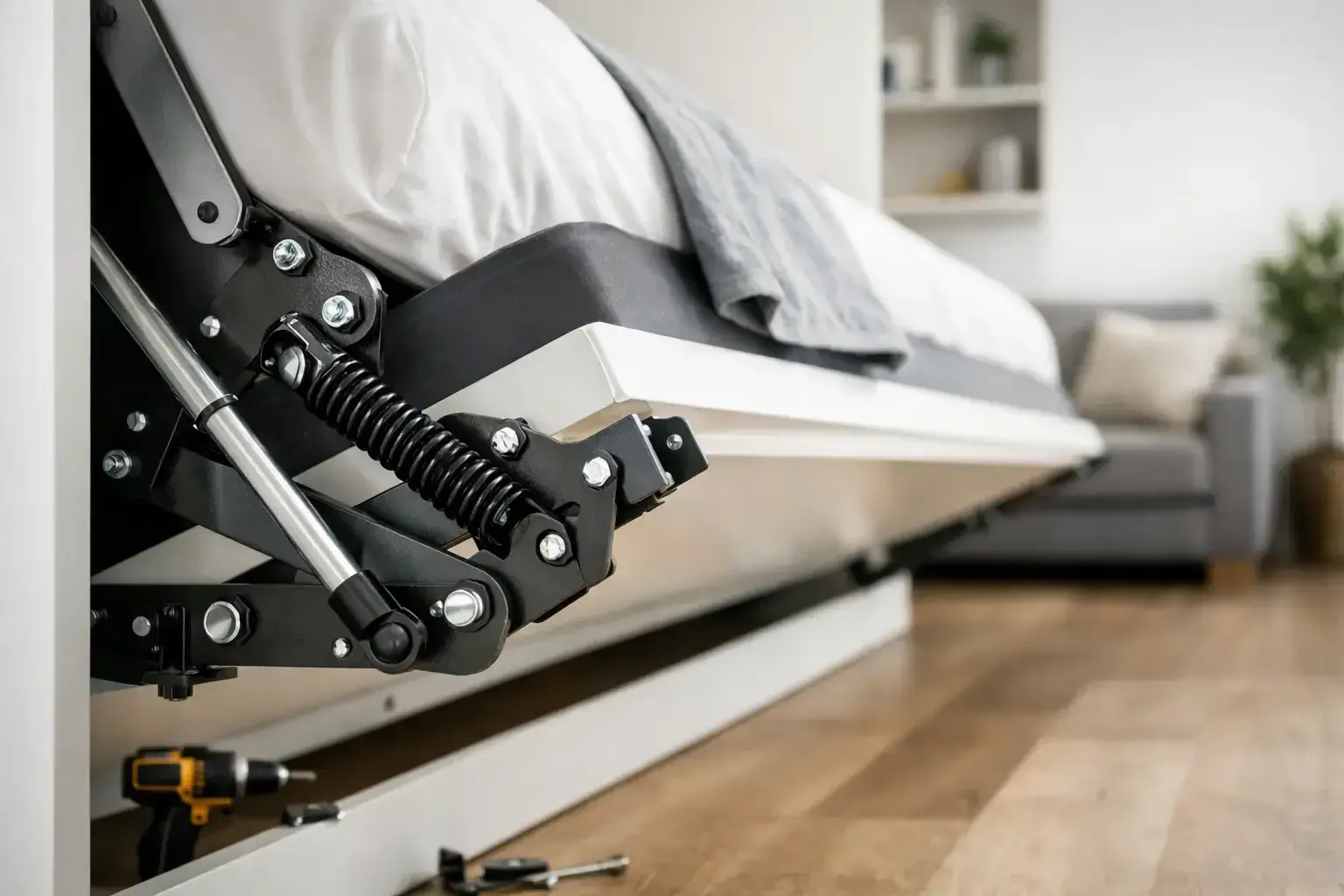
A wall bed can turn a home office into a guest room or give a compact South Florida condo an extra place to sleep without sacrificing everyday function. But a beautiful cabinet face is only part of the equation. This murphy bed hardware review focuses on the components that determine whether a bed feels secure, opens comfortably, and continues to perform well after years of use.
For homeowners considering a custom wall bed, hardware deserves the same attention as finishes, storage, and room layout. The mechanism carries a substantial load, controls the bed’s movement, and affects how much clearance the room needs. It is not the place to compromise for a lower initial price.
What Murphy Bed Hardware Actually Does
Murphy bed hardware is the engineered system behind the wall bed. It includes the lift mechanism, pivot points, mounting brackets, support legs, frame connections, and safety components that allow the bed to move from vertical storage to a level sleeping surface.
A properly specified system does more than make the bed fold down. It counterbalances the mattress and frame so the user is not wrestling with the weight. When the bed is raised, it should stay securely in its closed position. When lowered, it should settle into place with controlled movement rather than dropping abruptly or requiring excessive force.
The cabinet surrounding the mechanism also matters. Hardware cannot compensate for weak construction, poorly anchored panels, or an installation surface that has not been properly evaluated. A dependable wall bed is a complete system: quality hardware, a correctly built cabinet, appropriate mattress specifications, and professional installation working together.
Murphy Bed Hardware Review: The Main System Types
Most residential wall beds use one of two counterbalance approaches: spring systems or piston systems. Both can be effective when engineered, installed, and adjusted correctly. The better choice depends on the bed size, cabinet design, mattress weight, expected frequency of use, and the level of serviceability a homeowner prefers.
Spring lift systems
Spring-based hardware has a long track record in wall bed construction. These systems use tensioned springs to offset the bed’s weight as it opens and closes. They can offer smooth, controlled operation and are often designed with adjustment options to accommodate a specified mattress range.
The primary advantage is proven mechanical performance. High-quality spring systems are built for repeated cycles and can be adjusted by trained installers as conditions change. They are especially well suited to custom cabinetry because the mechanism can be precisely matched to the bed frame and mattress.
The trade-off is that springs are under tension and should not be adjusted casually. If a bed begins to feel unusually heavy, closes too forcefully, or no longer rests level, it needs a professional inspection rather than a quick DIY repair.
Piston lift systems
Piston systems use gas struts, similar in concept to the supports used on some vehicle hatches. They are compact and can create a refined opening experience when correctly rated for the weight of the bed and mattress.
For homeowners, the appeal is often a clean appearance and assisted movement. However, piston performance depends heavily on correct sizing. A strut that is too weak makes the bed difficult to raise; one that is too strong can make lowering it awkward. Over time, gas pistons may also lose pressure and require replacement.
Neither system is automatically superior in every application. The more useful question is whether the mechanism is rated for the exact configuration being installed, including mattress weight, bed size, frame construction, and the storage features built around it.
What Separates Quality Hardware From a Basic Kit
A wall bed should feel deliberate at every point of use. When assessing hardware, look beyond a general claim that it is heavy-duty. The details show whether a system was designed for reliable residential use.
First, consider the bed’s balance. A well-calibrated mechanism allows most adults to lower and raise the bed with reasonable effort. It should not require a sudden pull, a sharp lift, or a second person to manage it. Smooth operation is not merely a luxury feature. It reduces strain on the hardware, cabinetry, and people using the room.
Next, inspect the frame and pivot construction. Steel components should be substantial, cleanly finished, and securely connected. Pivot points should operate without noticeable wobble. Over time, loose connections can lead to squeaks, uneven alignment, and stress on the cabinet structure.
Support legs are another small detail with a large role. They must deploy fully and rest firmly on the floor so the frame is properly supported at night. The best designs integrate the legs neatly into the face panel or frame, preserving the polished look of the room without making setup complicated.
Finally, hardware should be compatible with the intended mattress. Many wall beds have a maximum mattress thickness and weight. Exceeding either limit can prevent the bed from closing correctly, upset the counterbalance system, and place added pressure on components. A luxurious mattress is not necessarily the right mattress for a wall bed if it falls outside the hardware specifications.
Safety Is Built Into the Whole Installation
Homeowners often ask whether wall beds are safe. A professionally designed and installed wall bed can be a highly dependable solution, but safety comes from correct engineering and installation, not from the hardware package alone.
The cabinet needs secure anchoring to a suitable wall structure. The installation team should identify proper attachment points and account for the home’s conditions before mounting the unit. In older properties, condominium buildings, or rooms with unusual wall construction, that evaluation is especially valuable.
The bed also needs sufficient clearance. Ceiling fans, pendant lighting, area rugs, nearby furniture, and open drawers can all interfere with operation. A thoughtful design considers the bed’s full path of travel before the cabinet is manufactured, not after it arrives at the home.
For families, simple operating guidance matters as well. Children should not be permitted to use the wall bed as playground equipment or operate it without supervision. The bed should be lowered and raised with bedding arranged according to the system’s requirements, and the mechanism should never be altered by an untrained person.
Why Custom Design Improves Hardware Performance
Off-the-shelf wall bed kits can appear straightforward, yet they place much of the technical responsibility on the homeowner or contractor assembling them. Cabinet dimensions must be exact. The frame must be square. The mechanism must be aligned and tensioned properly. The unit must be anchored into appropriate structure.
With a custom wall bed, those interdependent details are addressed as part of one design process. The bed can be planned around a home office, bookshelves, display storage, drawers, a media center, or wardrobe cabinetry. More importantly, the cabinetry and hardware are selected to work as one finished installation rather than assembled as separate pieces.
At Closets Beyond, wall bed planning begins with how the room needs to function when the bed is both open and closed. A guest room may need a desk and closed storage during the week. A living area may need built-in shelving that feels architectural rather than temporary. A custom approach makes it possible to protect the room’s style without losing the practical value of an additional sleeping space.
Signs Your Wall Bed Hardware Needs Attention
Quality hardware is designed for regular use, but every mechanical system benefits from occasional observation. A new squeak does not always signal a serious problem, yet changes in movement should not be ignored.
Schedule a service assessment if the bed feels significantly heavier than before, will not stay securely closed, drops quickly during lowering, sits unevenly on the floor, or develops visible gaps around the frame. Also pay attention to loose fasteners, damaged support legs, or cabinet movement at the wall. Early service is typically simpler than waiting for a minor alignment issue to affect the frame or cabinetry.
Avoid applying lubricants or making tension adjustments without guidance. Some products can attract dust, affect finishes, or interfere with components that require a specific service procedure. The right maintenance plan depends on the hardware manufacturer and the way the bed was installed.
The Best Hardware Is the Hardware You Hardly Notice
The strongest wall bed hardware does not demand attention every time guests arrive. It allows the bed to lower with confidence, sleep comfortably, and disappear again when the room needs to return to its daytime purpose.
When comparing wall bed options, ask how the mechanism is rated, how the cabinet will be anchored, what mattress limits apply, and who will handle installation and future service. Those answers reveal far more about long-term value than a cabinet finish or a promotional price alone. A well-designed wall bed should make a room feel more expansive, more organized, and ready for whatever the day requires.
See your space in 3D before anything is built.
Every consultation includes a 3D design of your space. Your designer measures, plans it with you and gives you a quote that fits your budget.
- 5.0 from 24 Google reviews
- Lifetime guarantee on our imported materials
954-213-5836Open Mon–Sat 8–6