
Plan Functional Mudroom Lockers for Your Home
Closets Beyond6 min read
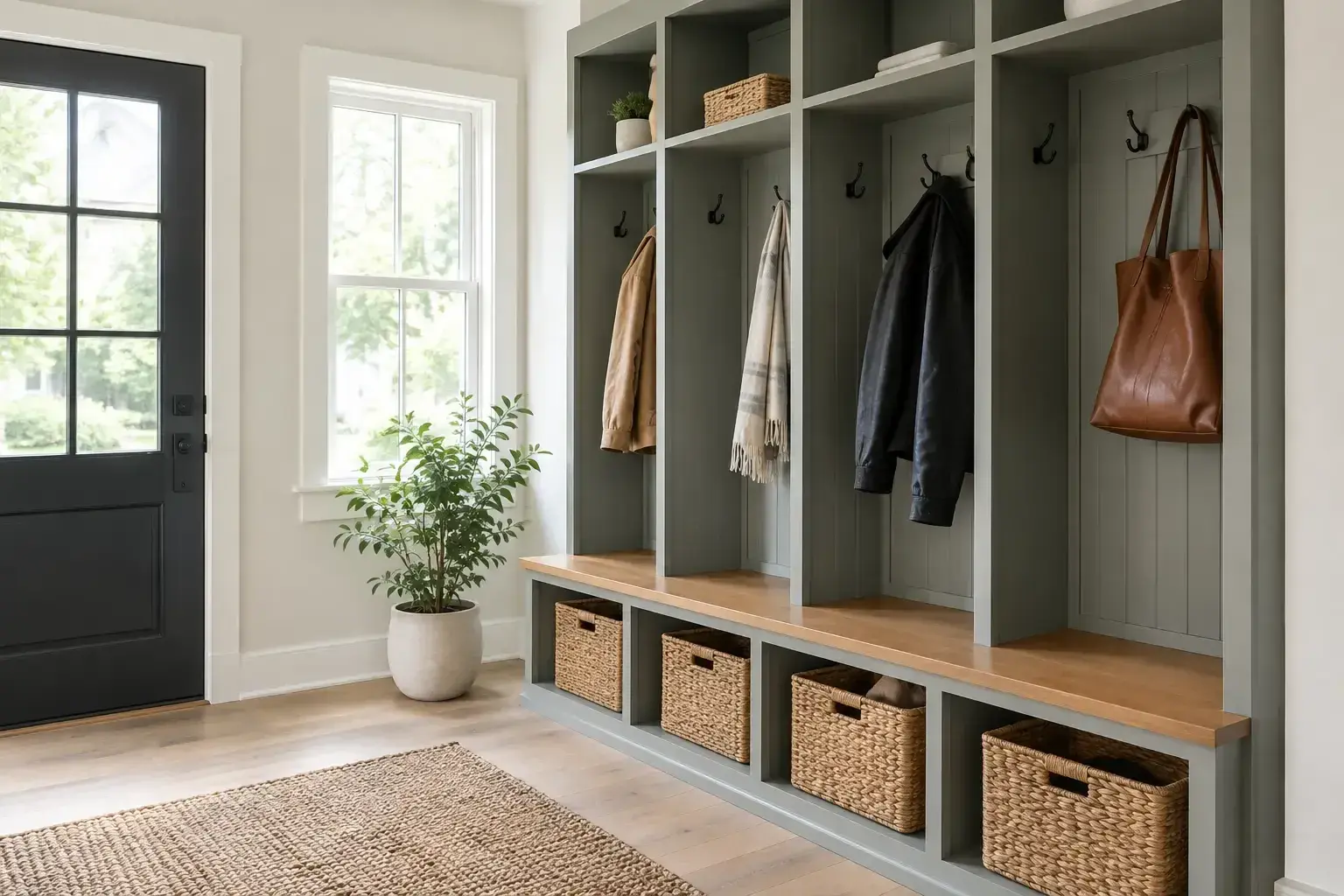
The entryway should not become the household’s drop zone five minutes after everyone walks through the door. When you plan functional mudroom lockers around the real rhythm of your family, shoes have a landing place, backpacks stop migrating across the kitchen, and wet gear is contained before it reaches the rest of the home. The result feels less like a utility space and more like a thoughtful transition between the outside world and a well-organized home.
A successful mudroom is not defined by how many cabinets it can hold. It is defined by whether every person can come in, put things away quickly, and head back out without a scavenger hunt. That requires intentional dimensions, durable materials, and storage assigned to the way your household actually lives.
Start With the Traffic Pattern, Not the Cabinet Style
Before selecting finishes or door profiles, consider how people enter the home. A mudroom near the garage serves different needs than one connected to a front entry, pool area, or laundry room. Watch what arrives at that door during a normal week: work bags, sports equipment, pet supplies, school papers, umbrellas, beach towels, grocery totes, and shoes all compete for space.
The clearest layout follows the natural sequence of arrival. There should be a place to hang outerwear, a place to sit while removing shoes, a designated shoe zone, and enclosed storage for the visual clutter that does not need to remain on display. When the room is narrow, vertical storage often does more than a deeper bench. When the room is generous, a bench with drawers and tall lockers can create a polished, furniture-like wall.
Also account for door swings, hallway clearance, and the way several people move through the room at once. An impressive bank of lockers is less useful if an open door blocks the path to the kitchen or laundry room. Custom planning makes it possible to fit storage around architectural realities instead of forcing a standard configuration into the space.
Give Each Person a Defined Locker Zone
Shared storage sounds efficient until no one knows where anything belongs. Individual locker zones create an easy household system, especially for families with children. Each zone can include a hook area, open cubby, lower shoe shelf, and an upper cabinet for seasonal or less frequently used items.
The number of zones should reflect the people who use the entrance, not simply the number of family members. A dedicated guest locker or a flexible zone for pet-walking supplies can prevent overflow elsewhere. For active families, one locker may need more vertical room for tennis racquets, baseball bags, or tall boots. For commuters, a charging drawer or a concealed place for a work bag can be more valuable than another open shelf.
Open lockers encourage fast daily use because items are visible and easy to reach. They also require a bit more discipline. If you prefer a cleaner, more tailored look, combine open niches with closed upper cabinets and drawers. This gives everyone a convenient landing spot while keeping spare supplies, seasonal accessories, and mismatched gear out of sight.
Choose Hook Heights That Work Now and Later
Hooks are one of the hardest-working details in a mudroom. For young children, lower hooks allow them to manage their own jackets and backpacks. Adults need a higher row for coats, hats, and larger bags. Two rows can serve both groups without asking anyone to reach or bend unnecessarily.
Plan enough spacing between hooks for bulky items. A row that looks orderly when empty can become crowded by winter jackets, tote bags, and rain gear. In South Florida, where lightweight layers, pool bags, umbrellas, and beach essentials may be more common than heavy coats, hook placement can be paired with ventilated cubbies and towel storage instead.
Plan Functional Mudroom Lockers Around Daily Storage Needs
The most useful lockers balance quick-access storage with concealed capacity. Open shelving supports the items used every day. Closed cabinetry protects items that are bulky, seasonal, or visually distracting. Drawers near the bench are especially effective for sunscreen, leashes, reusable bags, dog treats, gloves, and the small essentials that otherwise collect on counters.
Shoe storage deserves more attention than it usually receives. Estimate how many pairs are realistically in rotation, then add capacity for guests and seasonal changes. Adjustable shelves accommodate boots and larger footwear, while angled shelves can make everyday pairs easier to see. If shoes often arrive wet or sandy, use easy-to-clean surfaces and leave enough airflow to avoid trapping moisture and odor.
A built-in bench is not just decorative. It makes the room easier to use, particularly for children, older family members, and anyone changing out of athletic shoes. A comfortable bench depth generally falls around 16 to 20 inches, but the ideal measurement depends on available floor space and whether drawers will sit below. A cushion can soften the look, though a hard, wipeable bench surface may be the better choice for a high-traffic entry.
Select Materials for Real Life, Not Just the Reveal
Mudrooms face more abuse than most rooms in the home. Shoes scrape the floor, bags bump cabinetry, wet clothing hangs from hooks, and sand or grass finds its way into every corner. Premium materials and professional installation help the room retain its finish and function through years of daily use.
For cabinetry, durable, easy-care finishes are often the most practical choice. A light color can make a compact mudroom feel open, while a deeper tone can conceal scuffs and provide contrast against light walls. Wood-grain finishes bring warmth, especially in homes where the mudroom is visible from a main living area. The right choice depends on the home’s broader design, how much natural light the space receives, and how often it will need to be cleaned.
Hardware matters as well. Hooks should be securely anchored and sized for loaded bags, not just lightweight jackets. Soft-close drawers and doors reduce noise during busy mornings and protect the cabinetry over time. If the mudroom connects to a garage or pool area, consider flooring and base details that stand up to moisture and simplify cleanup.
Build In Flexibility for Changing Routines
A mudroom designed for toddlers will not serve teenagers in the same way. Adjustable shelves, removable baskets, and a mix of open and closed storage give the space room to evolve. What begins as a place for lunchboxes and rain boots can later hold sports gear, school technology, or supplies for a growing pet.
Avoid designing every inch around one highly specific item unless it is a lasting need. A dedicated golf-bag cabinet or pet feeding station can be excellent when it supports your lifestyle, but flexible storage usually delivers more value over the long term. The goal is personalization without creating a room that becomes outdated as soon as routines change.
Make the Mudroom Feel Like Part of the Home
Because mudrooms are practical, they are sometimes treated as purely utilitarian. Yet this space often sets the tone for arriving home. Coordinating cabinetry, hardware, wall color, and lighting with the rest of the interior creates continuity and makes the room feel intentional.
A decorative light fixture, framed family calendar area, or carefully selected bench cushion can add character without compromising function. If the room is visible from an open kitchen or living space, consider cabinetry that echoes nearby built-ins. For a more private garage entry, you may prioritize maximum capacity and durable finishes over decorative details. Both approaches can be beautiful when the design responds to the room’s location and purpose.
Professional 3D visualization is especially helpful here because mudrooms require many decisions in a compact footprint. Seeing the proportions of lockers, bench seating, doors, drawers, and finishes before production can prevent a costly mismatch between expectation and reality.
Work With a Design Partner Who Sees the Whole Space
Mudroom storage intersects with cabinetry, flooring, lighting, laundry functions, and sometimes remodeling work. A thoughtful design partner can evaluate the room as a complete system rather than a row of standalone cabinets. At Closets Beyond, that process begins with the household’s routines and ends with a tailored design, quality materials, and expert installation designed to make daily life easier.
The best mudroom lockers do not demand that your family become perfectly organized. They make order the easiest option. When every bag, shoe, jacket, and last-minute essential has a logical place, leaving home and coming back to it both feel a little calmer.
See your space in 3D before anything is built.
Every consultation includes a 3D design of your space. Your designer measures, plans it with you and gives you a quote that fits your budget.
- 5.0 from 24 Google reviews
- Lifetime guarantee on our imported materials
954-213-5836Open Mon–Sat 8–6