
Wall Beds Versus Sofa Beds for Flexible Rooms
Closets Beyond6 min read
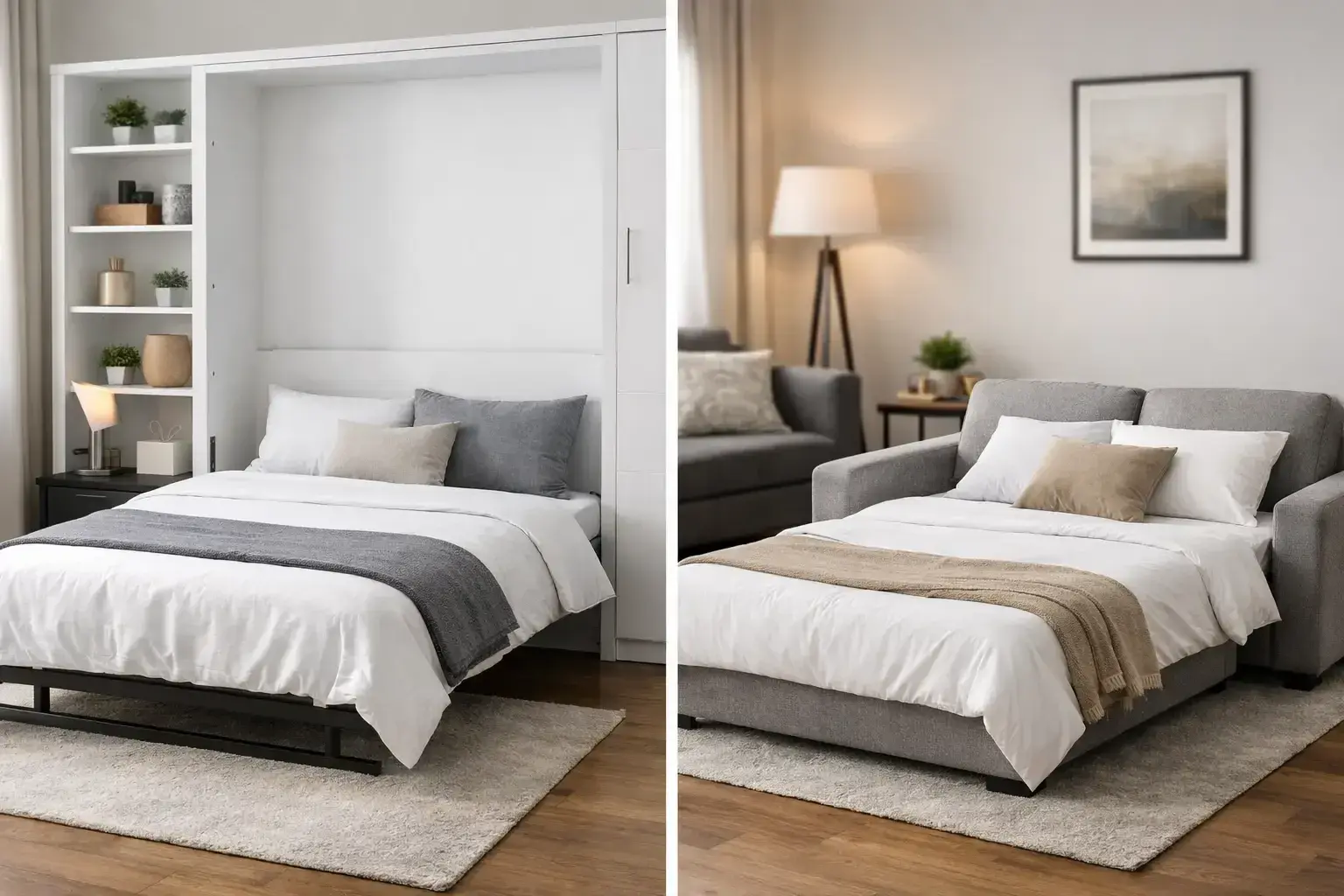
A spare room should not sit empty for most of the year just because it needs to host overnight guests a few times. That is the real question behind wall beds versus sofa beds: how can one room serve your everyday life beautifully while remaining ready when company arrives?
For homeowners who value a polished, organized home, the answer is rarely a simple matter of choosing the smaller piece of furniture. A wall bed and a sofa bed solve different problems. The right choice depends on how often guests stay, how the room functions during the day, the level of sleep comfort you expect, and whether built-in storage would make the space work harder.
Wall Beds Versus Sofa Beds: The Core Difference
A wall bed, often called a Murphy bed, folds vertically or horizontally into a cabinet when not in use. When designed as part of a custom wall system, it can be surrounded by shelving, drawers, wardrobes, a desk, or a media center. The room retains an open, purposeful appearance by day, then becomes a true bedroom at night.
A sofa bed looks and functions as seating first. Its mattress is stored within the sofa frame and unfolds when needed. It is an intuitive solution for a living room, den, or casual lounge where comfortable seating is the primary requirement and overnight guests are occasional.
Neither option is automatically better. The distinction comes down to which function deserves priority when the bed is closed. If the room needs to feel like a home office, library, or tailored multipurpose space, a wall bed generally offers greater design freedom. If the room must function mainly as a place to sit and relax, a sofa bed may be the more natural fit.
Sleep Comfort Favors a Wall Bed
Guest comfort is often the deciding factor. Most quality wall beds accommodate a standard mattress, allowing homeowners to select the thickness, support, and material that best suits their guests. The sleep experience can feel much closer to a conventional bed because it is, in many ways, a conventional mattress on a well-engineered folding mechanism.
Sofa beds have improved considerably, especially at higher price points, but they still ask one piece of furniture to perform two very different jobs. The mattress must fold inside the frame, which can limit thickness and support. Some models are perfectly suitable for a single overnight stay, while others can handle more frequent use. Still, people who regularly host parents, adult children, or out-of-town friends often prefer the comfort and familiar feel of a wall bed.
This does not mean a sofa bed is uncomfortable by definition. For a family room that hosts the occasional guest, it can be a practical, comfortable-enough solution. But if a guest room is used monthly or guests tend to stay for several nights, a wall bed usually makes a more welcoming impression.
Daytime Function Depends on the Room
The best choice becomes clearer when you picture the room at 10 a.m., not just at 10 p.m.
In a dedicated lounge or media room, a sofa bed provides seating without asking anyone to move furniture or open cabinetry. It is ready for movie nights, reading, and relaxed conversation. When guests arrive, the room converts quickly. This is especially useful in homes where the sofa is already central to the space.
In a home office, a wall bed often delivers a more refined result. When closed, it can disappear into cabinetry designed around your work habits. Integrated desks, file storage, display shelving, closed cabinets, and charging areas can give the room a composed, built-in look. The bed is present when needed without making the office feel like a bedroom every day.
The same logic applies to hobby rooms, study spaces, and flex rooms. A sofa bed always reads as a sofa. A wall bed can be designed to read as virtually anything else: a bookcase wall, a cabinet installation, or a tailored entertainment center. For homeowners looking to make every square foot feel intentional, that difference matters.
Storage and Visual Order Are Major Advantages
A sofa bed typically offers limited storage. Some designs include a small chaise compartment or allow space beneath the frame, but the sofa itself does not solve much of the room's organizational needs. You may still need separate bookcases, cabinets, or a closet system for linens, office supplies, luggage, and personal items.
A custom wall bed can bring those functions together. Side towers can hold folded linens and extra pillows. Drawers can keep seasonal bedding out of sight. Open shelves can showcase books and decor, while closed cabinetry keeps the everyday items that create visual clutter neatly contained. In a compact room, this integrated approach can replace several standalone pieces and free up valuable floor area.
That is particularly helpful in South Florida homes, where a spare bedroom may need to support visiting family, remote work, and storage for a growing household. Rather than crowding the room with mismatched furniture, a properly planned wall system can create a calm, cohesive finish.
Consider the Floor Space When Open
A wall bed saves floor space only when it is closed. When opened, it projects into the room much like a standard bed. Before choosing one, measure the full bed footprint and the circulation space needed around it. Guests should be able to get in and out comfortably, and doors, drawers, and closet access should remain functional.
A sofa bed also requires clearance when unfolded, but its furniture footprint is visible every day. In a narrow room, that can make the space feel more crowded, even when no one is sleeping there. On the other hand, a compact sofa bed may be the wiser choice if the wall needed for a Murphy bed is interrupted by windows, doors, or architectural features.
Professional planning helps prevent a common disappointment: selecting a space-saving solution that interferes with how the room actually works. A detailed layout can account for bed clearance, desk depth, outlets, lighting, trim, and the swing of nearby doors before anything is built.
Installation and Investment Are Different
A sofa bed is a relatively straightforward furniture purchase. It arrives, is placed in the room, and can be moved later if your needs change. That flexibility can be attractive for renters or homeowners who expect to relocate soon.
A wall bed is a built-in investment. It must be properly secured and carefully installed for safe, reliable operation. Custom designs also require upfront planning around dimensions, finishes, storage needs, and the room's intended use. The process takes more consideration, but the result can feel like an architectural feature rather than a temporary furniture solution.
Cost should be viewed through that same lens. A sofa bed may have a lower initial price, though quality models can still be a meaningful investment. A custom wall bed system costs more because it includes cabinetry, hardware, design expertise, materials, and installation. For homeowners planning to stay and improve how their home functions every day, the added utility and tailored appearance can justify the investment.
How to Choose the Right Option
Start with the room's primary job. If it is first and foremost a sitting room, choose seating that makes the space enjoyable every day. If it is an office, study, or flexible room that occasionally becomes a guest room, a wall bed may preserve the room's daytime purpose more effectively.
Then consider guest frequency and expectations. A sofa bed is often enough for a few single-night visits each year. A wall bed is typically the stronger choice for frequent guests, longer stays, or anyone who wants visitors to sleep on a real mattress.
Finally, look at the storage problem you are trying to solve. If your room already has sufficient cabinetry and only needs an extra place to sleep, a sofa bed may be all that is necessary. If the room lacks storage and feels underused, a custom wall bed system can address both needs in one tailored installation.
Closets Beyond approaches wall beds as part of a complete room plan, not as a stand-alone mechanism. With thoughtful design, premium materials, and professional installation, the room can feel open, organized, and ready for whatever the week brings.
The most successful flexible rooms do not look like they are waiting for guests. They support the way you live now, then quietly make space for the people you welcome home.
See your space in 3D before anything is built.
Every consultation includes a 3D design of your space. Your designer measures, plans it with you and gives you a quote that fits your budget.
- 5.0 from 24 Google reviews
- Lifetime guarantee on our imported materials
954-213-5836Open Mon–Sat 8–6